
Cart is Empty
- Home
- Products Map
Special offers
Products Map
Products Map
-

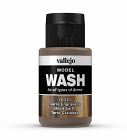
Vallejo Model Wash 35ml - Oiled Earth
Reproducing the weathering of surfaces exposed to harsh climatic conditions is difficult to achieve and the Vallejo washes offer the perfect solution. For armor, vehicles, planes, ship, figures and war game figures. All surfaces exposed to sun, wind and dust, rain and snow, experience a change in color, a loss of intensity, a dulling and general fading which however is not even or overall. For the model painter, these changes in color are very difficult to reproduce, and to achieve these effects on a model, washes or filters are the perfect solution. Vallejo washes are always needed to blend the edges of the colors on a model painted in various camouflage shades. Vallejo colors can also be mixed together to achieve further variations of shade and can be used with airbrush or brush, according to the model and the effect desired. Vallejo Model Wash can be mixed with Vallejo pigments to achieve a wide range of effects such as oil and flaked rust, mud, earth, dust, moss, etc. and when mixed with acrylic colors, they further help achieve the impact of heavy wear and weathering. Vallejo washes have been formulated with a modified acrylic resin so that the superficial tension is similar to that of the traditional solvent-based washes and filters, but with the advantage of working with a water-based medium. Average drying time is around 20 minutes. If several layers of Vallejo wash are to be applied, it is best to wait around 40 minutes between applications. Painting tools are cleaned with water. Contains Vallejo Model Wash 35ml - Oiled Earth
VAL76521£5.25 -
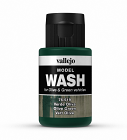
Vallejo Model Wash 35ml - Olive Green Wash
Reproducing the weathering of surfaces exposed to harsh climatic conditions is difficult to achieve and the Vallejo washes offer the perfect solution. For armor, vehicles, planes, ship, figures and war game figures. All surfaces exposed to sun, wind and dust, rain and snow, experience a change in color, a loss of intensity, a dulling and general fading which however is not even or overall. For the model painter, these changes in color are very difficult to reproduce, and to achieve these effects on a model, washes or filters are the perfect solution. Vallejo washes are always needed to blend the edges of the colors on a model painted in various camouflage shades. Vallejo colors can also be mixed together to achieve further variations of shade and can be used with airbrush or brush, according to the model and the effect desired. Vallejo Model Wash can be mixed with Vallejo pigments to achieve a wide range of effects such as oil and flaked rust, mud, earth, dust, moss, etc. and when mixed with acrylic colors, they further help achieve the impact of heavy wear and weathering. Vallejo washes have been formulated with a modified acrylic resin so that the superficial tension is similar to that of the traditional solvent-based washes and filters, but with the advantage of working with a water-based medium. Average drying time is around 20 minutes. If several layers of Vallejo wash are to be applied, it is best to wait around 40 minutes between applications. Painting tools are cleaned with water. Contains Vallejo Model Wash 35ml - Olive Green Wash
VAL76519£5.25 -
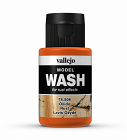
Vallejo Model Wash 35ml - Rust Wash
Reproducing the weathering of surfaces exposed to harsh climatic conditions is difficult to achieve and the Vallejo washes offer the perfect solution. For armor, vehicles, planes, ship, figures and war game figures. All surfaces exposed to sun, wind and dust, rain and snow, experience a change in color, a loss of intensity, a dulling and general fading which however is not even or overall. For the model painter, these changes in color are very difficult to reproduce, and to achieve these effects on a model, washes or filters are the perfect solution. Vallejo washes are always needed to blend the edges of the colors on a model painted in various camouflage shades. Vallejo colors can also be mixed together to achieve further variations of shade and can be used with airbrush or brush, according to the model and the effect desired. Vallejo Model Wash can be mixed with Vallejo pigments to achieve a wide range of effects such as oil and flaked rust, mud, earth, dust, moss, etc. and when mixed with acrylic colors, they further help achieve the impact of heavy wear and weathering. Vallejo washes have been formulated with a modified acrylic resin so that the superficial tension is similar to that of the traditional solvent-based washes and filters, but with the advantage of working with a water-based medium. Average drying time is around 20 minutes. If several layers of Vallejo wash are to be applied, it is best to wait around 40 minutes between applications. Painting tools are cleaned with water. Contains Vallejo Model Wash 35ml - Rust Wash
VAL76506£5.25 -
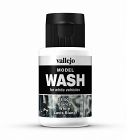
Vallejo Model Wash 35ml - White Wash
Reproducing the weathering of surfaces exposed to harsh climatic conditions is difficult to achieve and the Vallejo washes offer the perfect solution. For armor, vehicles, planes, ship, figures and war game figures. All surfaces exposed to sun, wind and dust, rain and snow, experience a change in color, a loss of intensity, a dulling and general fading which however is not even or overall. For the model painter, these changes in color are very difficult to reproduce, and to achieve these effects on a model, washes or filters are the perfect solution. Vallejo washes are always needed to blend the edges of the colors on a model painted in various camouflage shades. Vallejo colors can also be mixed together to achieve further variations of shade and can be used with airbrush or brush, according to the model and the effect desired. Vallejo Model Wash can be mixed with Vallejo pigments to achieve a wide range of effects such as oil and flaked rust, mud, earth, dust, moss, etc. and when mixed with acrylic colors, they further help achieve the impact of heavy wear and weathering. Vallejo washes have been formulated with a modified acrylic resin so that the superficial tension is similar to that of the traditional solvent-based washes and filters, but with the advantage of working with a water-based medium. Average drying time is around 20 minutes. If several layers of Vallejo wash are to be applied, it is best to wait around 40 minutes between applications. Painting tools are cleaned with water. Contains Vallejo Model Wash 35ml - White Wash
VAL76501£5.25 -
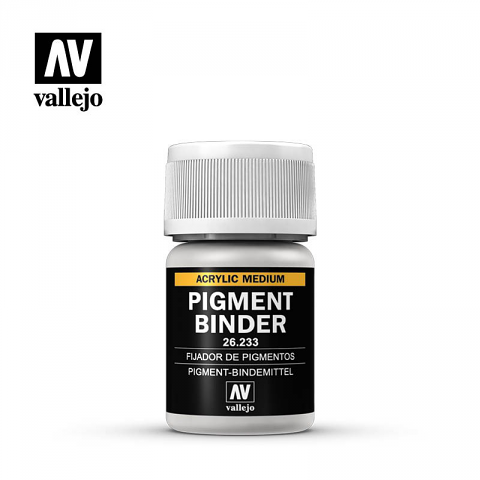
Vallejo Pigment Binder
Pigment Binder is a waterbased acrylic binder for pigments. Dries slowly, allows more time to manipulate pigment. Matt finish.
VAL26233£5.50 -
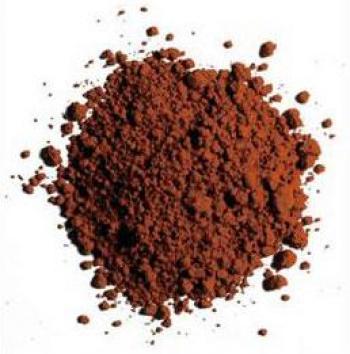
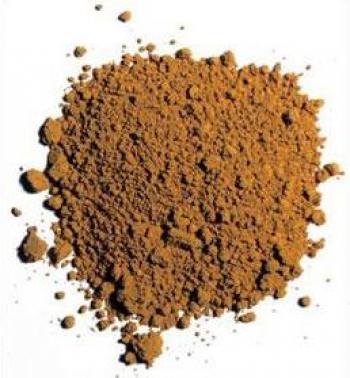
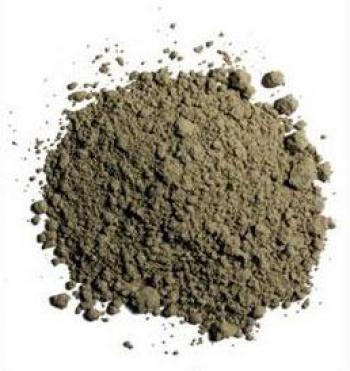
Vallejo Pigments - Brown Iron Oxide
Vallejo Pigments are used for weathering and ageing the finish of vehicles, armour, fortifications and structures; they are ideal for creating the effects of accumulated dust, mud, dirt and smoke produced by time and natural erosion. The pigments chosen for this range are all earth and iron oxides, especially suitable for all the different climatic and geographical conditions of the terrain of a diorama. They are pigments which are employed in the manufacture of Vallejo colors, and have been especially processed and micronized so that they are very easily dispersed in any liquid medium, from water to acrylic resins or turpentine. To adhere the pigment to the surface of the model Matte Medium is used, or Glaze Medium which dries more slowly and allows more time to simulate water and snow run-offs and to move the pigment into and around the details of the model.VAL73108£3.99 -
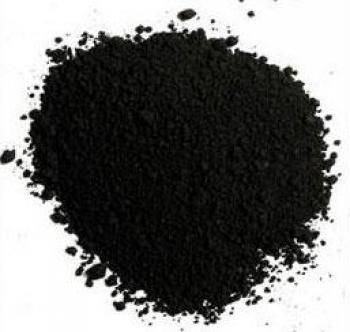
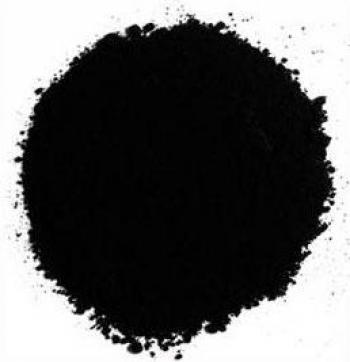
Vallejo Pigments - Carbon Smoke
Vallejo Pigments are used for weathering and ageing the finish of vehicles, armour, fortifications and structures; they are ideal for creating the effects of accumulated dust, mud, dirt and smoke produced by time and natural erosion. The pigments chosen for this range are all earth and iron oxides, especially suitable for all the different climatic and geographical conditions of the terrain of a diorama. They are pigments which are employed in the manufacture of Vallejo colors, and have been especially processed and micronized so that they are very easily dispersed in any liquid medium, from water to acrylic resins or turpentine. To adhere the pigment to the surface of the model Matte Medium is used, or Glaze Medium which dries more slowly and allows more time to simulate water and snow run-offs and to move the pigment into and around the details of the model.VAL73116£3.99 -
Vallejo Pigments - Chrome Oxide Green
Vallejo Pigments are used for weathering and ageing the finish of vehicles, armour, fortifications and structures; they are ideal for creating the effects of accumulated dust, mud, dirt and smoke produced by time and natural erosion. The pigments chosen for this range are all earth and iron oxides, especially suitable for all the different climatic and geographical conditions of the terrain of a diorama. They are pigments which are employed in the manufacture of Vallejo colors, and have been especially processed and micronized so that they are very easily dispersed in any liquid medium, from water to acrylic resins or turpentine. To adhere the pigment to the surface of the model Matte Medium is used, or Glaze Medium which dries more slowly and allows more time to simulate water and snow run-offs and to move the pigment into and around the details of the model.VAL73112£3.99 -
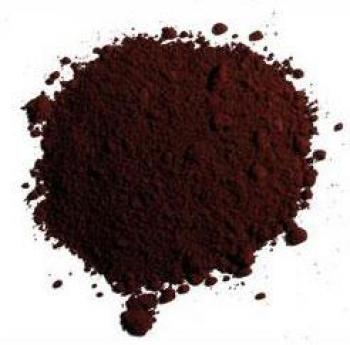
Vallejo Pigments - Dark Red Ochre
Vallejo Pigments are used for weathering and ageing the finish of vehicles, armour, fortifications and structures; they are ideal for creating the effects of accumulated dust, mud, dirt and smoke produced by time and natural erosion. The pigments chosen for this range are all earth and iron oxides, especially suitable for all the different climatic and geographical conditions of the terrain of a diorama. They are pigments which are employed in the manufacture of Vallejo colors, and have been especially processed and micronized so that they are very easily dispersed in any liquid medium, from water to acrylic resins or turpentine. To adhere the pigment to the surface of the model Matte Medium is used, or Glaze Medium which dries more slowly and allows more time to simulate water and snow run-offs and to move the pigment into and around the details of the model.VAL73107£3.99 -
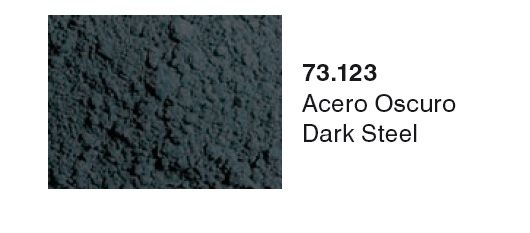
Vallejo Pigments - Dark Steel
Vallejo Pigments are used for weathering and ageing the finish of vehicles, armour, fortifications and structures; they are ideal for creating the effects of accumulated dust, mud, dirt and smoke produced by time and natural erosion. The pigments chosen for this range are all earth and iron oxides, especially suitable for all the different climatic and geographical conditions of the terrain of a diorama. They are pigments which are employed in the manufacture of Vallejo colors, and have been especially processed and micronized so that they are very easily dispersed in any liquid medium, from water to acrylic resins or turpentine. To adhere the pigment to the surface of the model Matte Medium is used, or Glaze Medium which dries more slowly and allows more time to simulate water and snow run-offs and to move the pigment into and around the details of the model.
VAL73123£3.99 -
Vallejo Pigments - Dark Yellow Ochre
Vallejo Pigments are used for weathering and ageing the finish of vehicles, armour, fortifications and structures; they are ideal for creating the effects of accumulated dust, mud, dirt and smoke produced by time and natural erosion. The pigments chosen for this range are all earth and iron oxides, especially suitable for all the different climatic and geographical conditions of the terrain of a diorama. They are pigments which are employed in the manufacture of Vallejo colors, and have been especially processed and micronized so that they are very easily dispersed in any liquid medium, from water to acrylic resins or turpentine. To adhere the pigment to the surface of the model Matte Medium is used, or Glaze Medium which dries more slowly and allows more time to simulate water and snow run-offs and to move the pigment into and around the details of the model.VAL73103£3.99 -
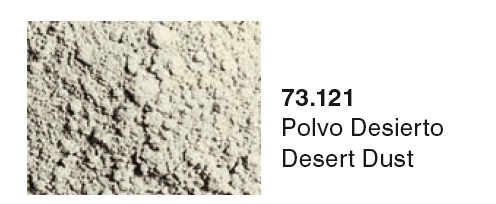
Vallejo Pigments - Desert Dust
Vallejo Pigments are used for weathering and ageing the finish of vehicles, armour, fortifications and structures; they are ideal for creating the effects of accumulated dust, mud, dirt and smoke produced by time and natural erosion. The pigments chosen for this range are all earth and iron oxides, especially suitable for all the different climatic and geographical conditions of the terrain of a diorama. They are pigments which are employed in the manufacture of Vallejo colors, and have been especially processed and micronized so that they are very easily dispersed in any liquid medium, from water to acrylic resins or turpentine. To adhere the pigment to the surface of the model Matte Medium is used, or Glaze Medium which dries more slowly and allows more time to simulate water and snow run-offs and to move the pigment into and around the details of the model.VAL73121£3.99 -
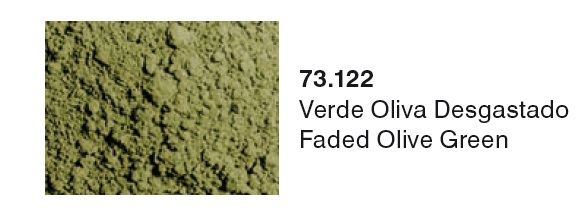
Vallejo Pigments - Faded Olive Green
Vallejo Pigments are used for weathering and ageing the finish of vehicles, armour, fortifications and structures; they are ideal for creating the effects of accumulated dust, mud, dirt and smoke produced by time and natural erosion. The pigments chosen for this range are all earth and iron oxides, especially suitable for all the different climatic and geographical conditions of the terrain of a diorama. They are pigments which are employed in the manufacture of Vallejo colors, and have been especially processed and micronized so that they are very easily dispersed in any liquid medium, from water to acrylic resins or turpentine. To adhere the pigment to the surface of the model Matte Medium is used, or Glaze Medium which dries more slowly and allows more time to simulate water and snow run-offs and to move the pigment into and around the details of the model.VAL73122£3.99 -
Vallejo Pigments - Green Earth
Vallejo Pigments are used for weathering and ageing the finish of vehicles, armour, fortifications and structures; they are ideal for creating the effects of accumulated dust, mud, dirt and smoke produced by time and natural erosion. The pigments chosen for this range are all earth and iron oxides, especially suitable for all the different climatic and geographical conditions of the terrain of a diorama. They are pigments which are employed in the manufacture of Vallejo colors, and have been especially processed and micronized so that they are very easily dispersed in any liquid medium, from water to acrylic resins or turpentine. To adhere the pigment to the surface of the model Matte Medium is used, or Glaze Medium which dries more slowly and allows more time to simulate water and snow run-offs and to move the pigment into and around the details of the model.VAL73111£3.99 -
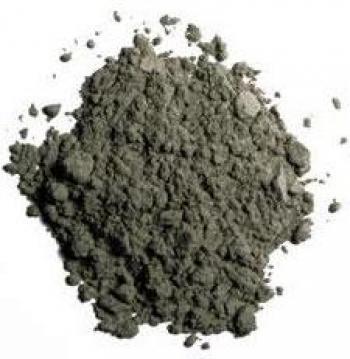
Vallejo Pigments - Light Slate Grey
Vallejo Pigments are used for weathering and ageing the finish of vehicles, armour, fortifications and structures; they are ideal for creating the effects of accumulated dust, mud, dirt and smoke produced by time and natural erosion. The pigments chosen for this range are all earth and iron oxides, especially suitable for all the different climatic and geographical conditions of the terrain of a diorama. They are pigments which are employed in the manufacture of Vallejo colors, and have been especially processed and micronized so that they are very easily dispersed in any liquid medium, from water to acrylic resins or turpentine. To adhere the pigment to the surface of the model Matte Medium is used, or Glaze Medium which dries more slowly and allows more time to simulate water and snow run-offs and to move the pigment into and around the details of the model.VAL73113£3.99 -
Vallejo Pigments - Natural Iron Oxide
Vallejo Pigments are used for weathering and ageing the finish of vehicles, armour, fortifications and structures; they are ideal for creating the effects of accumulated dust, mud, dirt and smoke produced by time and natural erosion. The pigments chosen for this range are all earth and iron oxides, especially suitable for all the different climatic and geographical conditions of the terrain of a diorama. They are pigments which are employed in the manufacture of Vallejo colors, and have been especially processed and micronized so that they are very easily dispersed in any liquid medium, from water to acrylic resins or turpentine. To adhere the pigment to the surface of the model Matte Medium is used, or Glaze Medium which dries more slowly and allows more time to simulate water and snow run-offs and to move the pigment into and around the details of the model.VAL73115£3.99 -
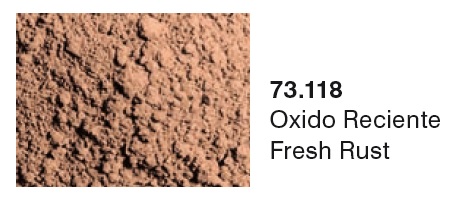
Vallejo Pigments - New Rust
Vallejo Pigments are used for weathering and ageing the finish of vehicles, armour, fortifications and structures; they are ideal for creating the effects of accumulated dust, mud, dirt and smoke produced by time and natural erosion. The pigments chosen for this range are all earth and iron oxides, especially suitable for all the different climatic and geographical conditions of the terrain of a diorama. They are pigments which are employed in the manufacture of Vallejo colors, and have been especially processed and micronized so that they are very easily dispersed in any liquid medium, from water to acrylic resins or turpentine. To adhere the pigment to the surface of the model Matte Medium is used, or Glaze Medium which dries more slowly and allows more time to simulate water and snow run-offs and to move the pigment into and around the details of the model.
VAL73118£3.99 -
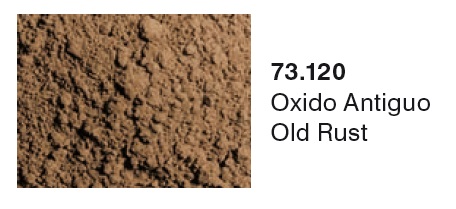
Vallejo Pigments - Old Rust
Vallejo Pigments are used for weathering and ageing the finish of vehicles, armour, fortifications and structures; they are ideal for creating the effects of accumulated dust, mud, dirt and smoke produced by time and natural erosion. The pigments chosen for this range are all earth and iron oxides, especially suitable for all the different climatic and geographical conditions of the terrain of a diorama. They are pigments which are employed in the manufacture of Vallejo colors, and have been especially processed and micronized so that they are very easily dispersed in any liquid medium, from water to acrylic resins or turpentine. To adhere the pigment to the surface of the model Matte Medium is used, or Glaze Medium which dries more slowly and allows more time to simulate water and snow run-offs and to move the pigment into and around the details of the model.VAL73120£3.99 -
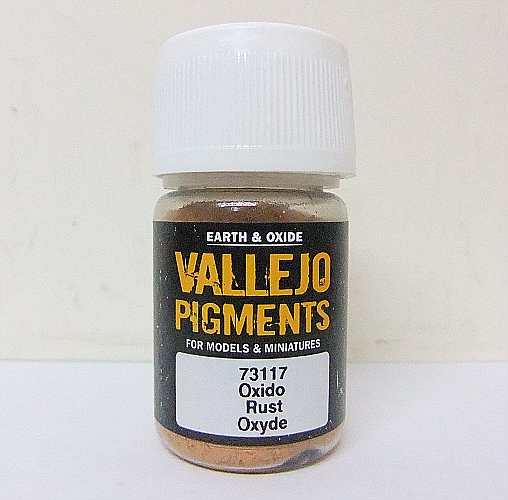
Vallejo Pigments - Rust
Vallejo Pigments are used for weathering and ageing the finish of vehicles, armour, fortifications and structures; they are ideal for creating the effects of accumulated dust, mud, dirt and smoke produced by time and natural erosion. The pigments chosen for this range are all earth and iron oxides, especially suitable for all the different climatic and geographical conditions of the terrain of a diorama. They are pigments which are employed in the manufacture of Vallejo colors, and have been especially processed and micronized so that they are very easily dispersed in any liquid medium, from water to acrylic resins or turpentine. To adhere the pigment to the surface of the model Matte Medium is used, or Glaze Medium which dries more slowly and allows more time to simulate water and snow run-offs and to move the pigment into and around the details of the model.VAL73117£3.99 -
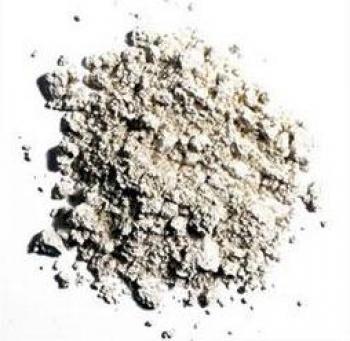
Vallejo Pigments - Titanium White
Vallejo Pigments are used for weathering and ageing the finish of vehicles, armour, fortifications and structures; they are ideal for creating the effects of accumulated dust, mud, dirt and smoke produced by time and natural erosion. The pigments chosen for this range are all earth and iron oxides, especially suitable for all the different climatic and geographical conditions of the terrain of a diorama. They are pigments which are employed in the manufacture of Vallejo colors, and have been especially processed and micronized so that they are very easily dispersed in any liquid medium, from water to acrylic resins or turpentine. To adhere the pigment to the surface of the model Matte Medium is used, or Glaze Medium which dries more slowly and allows more time to simulate water and snow run-offs and to move the pigment into and around the details of the model.VAL73101£3.99 -
Vallejo Premium Polyurethane Gloss Varnish 200ml
Premium is a range of acrylic colors specifically designed for airbrushing and for optimum adherence on surfaces such as fiberglass, polyethylene, polycarbonate, metal and Lexan. Premium has been formulated with permanent pigments and a new, extremely resistant hybrid resin of acrylic-polyurethane. The Premium range contains matt and opaque, transparent, metallic, and fluorescent colors, and includes the specific varnishes and auxiliary products of the product line. Premium is especially recommended for painting motorcycle helmets, fuel tanks, surfboards and similar surfaces exposed to hard wear, and resists impacts and cracking as well as direct exposure to heat. The Premium colors resist fuel residue proof (as used in RC) ofup to at least 35% Nitro. It is recommended to apply Premium in successive layers on previously primed surfaces. A few hours after application, the Premium colors will form a homogenous film of extraordinary strength and resistance. The recommended compressor settings are around 15-20 PSI, o 0.5 to 1 kg. For a final, especially resistant protection, a final (2K) urethane varnish is recommended (applied by aerosol or airbrush). Painting tools can be cleaned with water.
VAL63064£12.99 -
Vallejo Sandy Paste
Vallejo - Sandy Paste - 30mlVAL26232£5.25 -
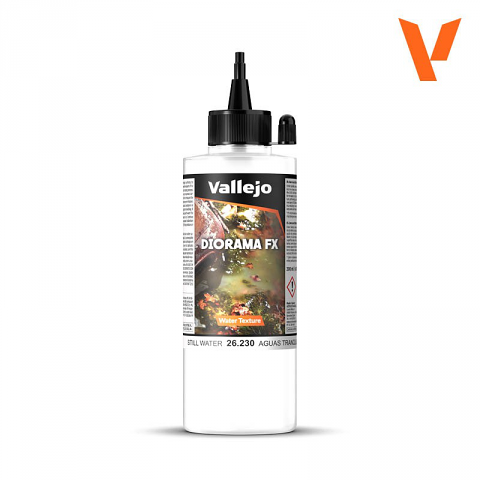
Vallejo Still Water
Contains 200ml of still water liquid
VAL26230£12.99 -
Vallejo Still Water 30ml
A glass clear liquid which levels itself and dries to a crystal clear film. It can be poured directly from the bottle and will settle in the prepared space of the layout. For extra depth, best apply in several. Ideal for ponds and lakes, canals, bays, and lagoons. Still Water is a water-based polyurethane dispersion. When applied on a non-porous surface, like glass or clear polyesters and plastics, Still Water can be peeled off once dry and cut into the desired form. Contains 30ml of still water liquid
VAL26235£6.50 -
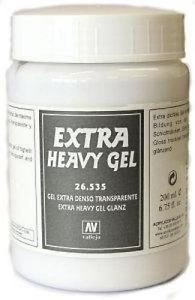
Vallejo Stone Textures - Extra Heavy Transparent Gel 200ml
Textures of earth and sand formulated with permanent pigments, microparticles and acrylic resin. This slightly gritty base can be applied with a brush or, painting knife and is perfect for all surfaces and terrains of dioramas. The products can be shaped before drying to achieve low relief textures such as truck and tank tracks, and they can be mixed with all other products of this range. If a less structured surface is required, the textures can be thinned down with water (20% to 40%). Packaging: In 200 ml. pots
VAL26535£11.50 -
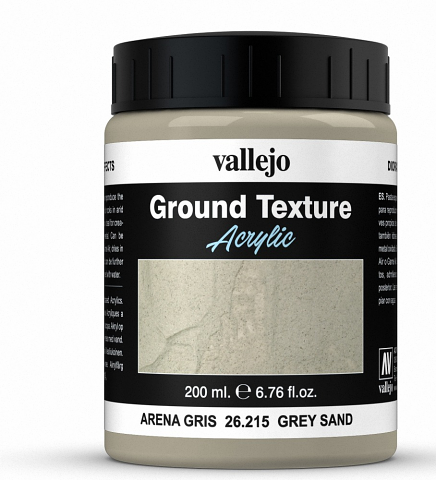
Vallejo Stone Textures - Grey Sand 200ml
Textures of earth and sand formulated with permanent pigments, microparticles and acrylic resin. This slightly gritty base can be applied with a brush or, painting knife and is perfect for all surfaces and terrains of dioramas. The products can be shaped before drying to achieve low relief textures such as truck and tank tracks, and they can be mixed with all other products of this range. If a less structured surface is required, the textures can be thinned down with water (20% to 40%). Packaging: In 200 ml. pots
VAL26215£10.75 -
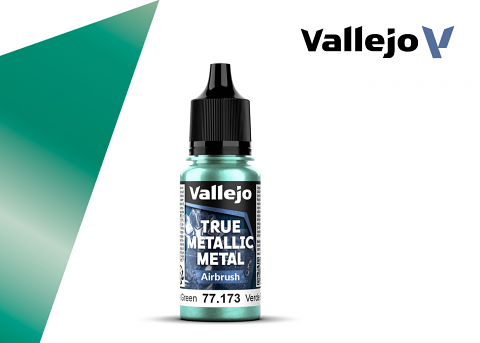
Vallejo True Metallic Metal Airbrush – Beetle Green (18ml)
Vallejo True Metallic Metal Airbrush: Beetle Green (18ml) – 77.173Provides smooth, even metallic coverage with strong colour intensity.Can be thinned with Vallejo Airbrush Thinner for subtle transitions & softer effects.Fully mixable colours designed for consistent, uniform metallic finishes.Ready to use straight from the bottle for optimal airbrush performance.VAL77173£3.50 -
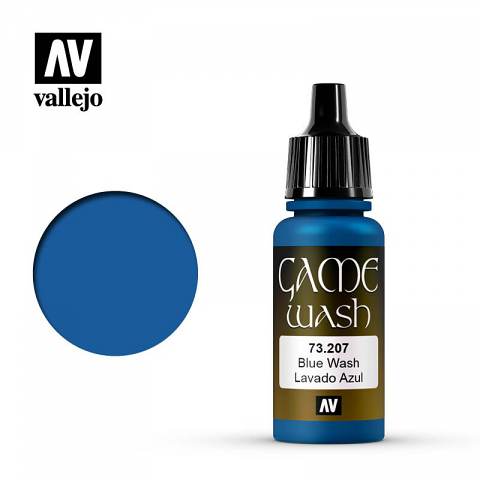
Vallejo Wash - Blue Shade
This wash, made by Vallejo, is designed for painting second world war and similar military paint schemes on miniature wargaming models. This paint bottle is one of the selected colours used by Battlefront Miniatures to make up their Flames Of War paint sets, although it is also ideal for Warhammer and Warhammer 40,000 models, made by Games Workshop. Vallejo is a specialist acrylic paint company based in Spain who have been manufacturing paint for the hobby and wargaming markets since 1965.The colors are supplied in 17ml plastic bottles with eyedropper.
VAL73207D£1.75£2.75save 36%
-
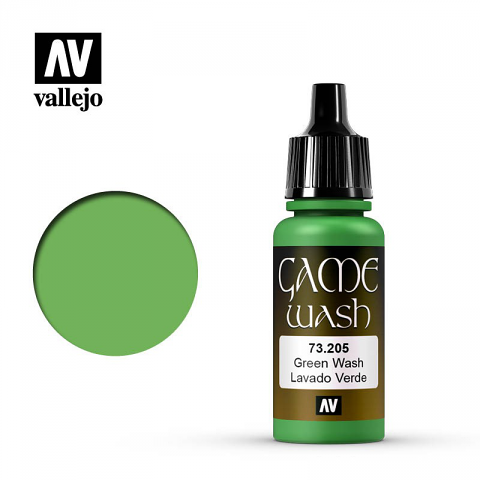
Vallejo Wash - Green Shade
This wash, made by Vallejo, is designed for painting second world war and similar military paint schemes on miniature wargaming models. This paint bottle is one of the selected colours used by Battlefront Miniatures to make up their Flames Of War paint sets, although it is also ideal for Warhammer and Warhammer 40,000 models, made by Games Workshop. Vallejo is a specialist acrylic paint company based in Spain who have been manufacturing paint for the hobby and wargaming markets since 1965.The colors are supplied in 17ml plastic bottles with eyedropper.
VAL73205D£1.75£2.75save 36% -
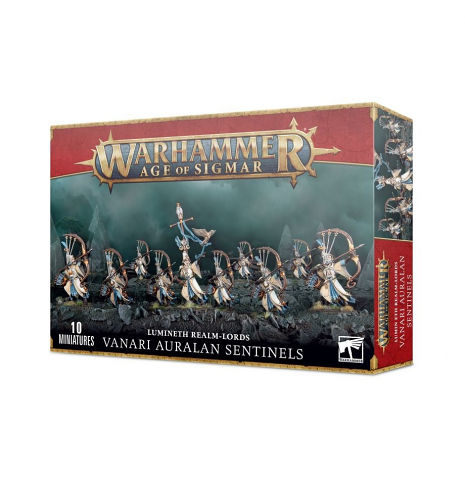
Vanari Auralan Sentinels
Master archers, the Auralan Sentinels wield complex aelven bows that can either fire straight and true or loft arrows high in the air to curve down onto distant foes. When their High Sentinel channels power into their arrowheads, they are all the more lethal.Auralan Sentinels are a superb ranged unit in your Lumineth Realm-lords army, capable of bombarding enemies at long range with hails of arrows. Enhanced with magical power, they'll make short work of even heavily armoured foes. Meanwhile, the unit's Scryhawk Lantern ensues that none can hide from their fusillades.This kit builds 10 Auralan Sentinels, in a variety of interchangeable and customisable designs. Thanks to a choice of bows, quivers and more, you’ll be able to ensure that even the most massive line of archers looks distinct. This kit also contains the options to build one Auralan Sentinel as a High Sentinel with a Scryhawk Lantern.87-58£36.00£40.00save 10% -
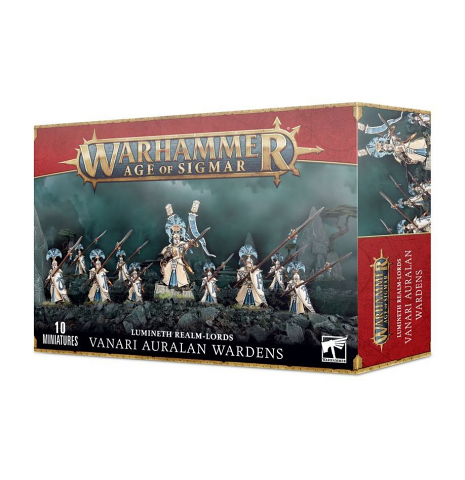
Vanari Auralan Wardens
The Auralan Wardens fight in close formation, using long pikes that they set to receive the charge of the foe. The Wardens guide their sunmetal tips into the enemy’s chests at the last moment; those pierced by them are slain in a heartbeat.Auralan Wardens are the front line of any Lumineth Realm-lords force, forming a nigh-impenetrable wall of pikes that's ideal for repelling enemy charges and dominating the objectives. Capable of making themselves even deadlier with magical spells, they're essential in nearly any force.This kit builds 10 Auralan Wardens in a variety of interchangeable and customisable designs. With various weapons, shields, helms and accessories, you'll be able to ensure that your pike block looks distinct. This kit also contains option to build one Auralan Warden as a High Warden.87-59£36.00£40.00save 10% -
Vanari Dawnriders
The Dawnriders charge the foe in tight formation, thundering into the enemy ranks and punching their lances through the chests of their foremost adversaries before leaping over their corpses so that their noble steeds might trample those behind.Vanari Dawnriders are infantry-slaying shock cavalry, ideal for scything through hordes of skeletons, grots or anyone else unfortunate enough to be caught in their path! They're perfect for cutting through enemy lines or using their superior speed to flank vulnerable war machines and wizards in the back line.This kit builds 5 Vanari Dawnriders, with options to build a Steedmaster and Standard Bearer. Interchangeable shields and helmet crests allow for customisation. It is supplied in 79 plastic components and comes with 5 60mm x 35mm oval bases.87-60DO£44.00 -
Vanguard Hunters Stormcast Eternals
Vanguard Hunters Stormcast Eternals is a multi part plastic kit contains the components necessary to assemble 10 Vanguard-Hunters. They come with a host of details, appropriate to their constant movement and veteran status: 2 shock handaxes and 10 sets of boltstorm magazines to attach to their waists, as well as grappling hooks and satchels. 2 arms featuring reloading boltstorm pistols are included as an optional assembly.
2 models in the kit can hold an astral compass – perfect for nomadic guerilla warfare, this arcane device allows them to navigate impossible geometries with ease, and thus attack the enemy from angles they least expect.
2 models can be assembled as Hunter-Primes – these variants feature a unique, sculpted shoulder pad with a bear motif, and carry their own shock handaxe, with inflicts extra attacks in-game.
This kit is supplied with 10 Citadel 40mm Round bases.
96-28£38.25£42.50save 10% -
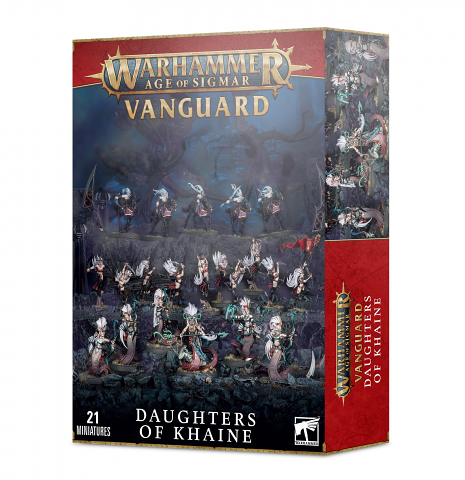
Vanguard: Daughters of Khaine
As deadly as they are graceful, the warlike aelves of the Daughters of Khaine seek to spill sacred torrents of blood in the name of their violent deity. Shaped by drops of Khaine's own blood, the elite Melusai Ironscale leads her slithering Blood Stalkers into battle. As their heartseeker arrows hiss overhead, Doomfire Warlocks fling howling bolts of dark magic and frenzied Witch Aelves leap into battle, eager to make an offering to the Bloody-Handed God.For those who wish to honour Morathi-Khaine in war, this Vanguard box makes an ideal starting point for a Daughters of Khaine collection – or a simple way to add to the ranks of your murderous aelven warriors – and will also save you money compared to buying the contents individually. With a Hero, Battleline, and additional support, this set offers a complete army in a box for you to bring to the tabletop in games of Warhammer Age of Sigmar.This set includes the following multipart plastic models:– 1x Melusai Ironscale– 10x Witch Aelves, which can alternatively be built as Sisters of Slaughter– 5x Blood Stalkers, which can alternatively be built as Blood Sisters– 5x Doomfire WarlocksAll models are supplied with their appropriate bases.These miniatures are supplied unpainted and require assembly – we recommend using Citadel Plastic Glue and Citadel paints.70-12£78.75£87.50save 10% -
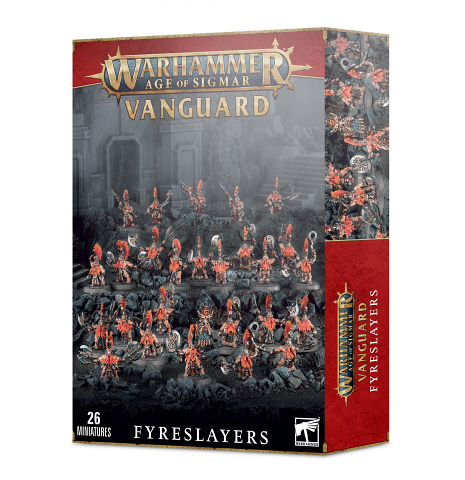
Vanguard: Fyreslayers
The lives of the Fyreslayers revolve around battle, for these grizzled duardin mercenaries will fight on behalf of any who meet their price in gold. Renowned for their fearsome tempers and unrivalled martial skills, the Fyreslayers seek treasure to gather the essence of their long-lost deity, Grimnir. Inspired by Battlesmiths bellowing the deeds of their forebears, stalwart Hearthguard warriors and unyielding Vulkite Berzerkers charge into battle, craving glory and gold alike.If you wish to honour Grimnir in battle, this Vanguard box makes an ideal starting point for a Fyreslayers collection – or a simple way to add to the ranks of your lodge of fiery warriors – and will also save you money compared to buying the contents individually. With a Hero, Battleline, and additional support, this set offers a complete army in a box for you to bring to the tabletop in games of Warhammer Age of Sigmar.This set includes the following multipart plastic models:– 1x Battlesmith– 5x Hearthguard Berzerkers, which can alternatively be built as Auric Hearthguard– 20x Vulkite BerzerkersAll models are supplied with their appropriate bases.These miniatures are supplied unpainted and require assembly – we recommend using Citadel Plastic Glue and Citadel paints.70-06£78.75£87.50save 10% -
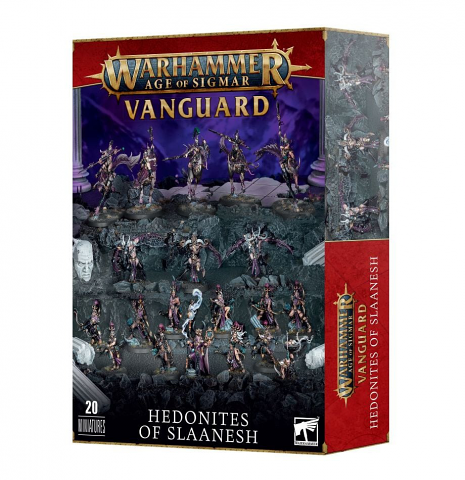
Vanguard: Hedonites Of Slaanesh
The Hedonites of Slaanesh revel in suffering, and worship their absent deity by engaging in the most vile acts imaginable. Empowered by depravity and addicted to extremes of sensation, the servants of the Dark Prince are a scourge on the realms. Each warband is an unpredictable and quixotic terror, guided by diabolical whims as they conquer and pillage.If you’re looking to spread glorious excess across the Mortal Realms, this box is a great way to start a new Hedonites of Slaanesh army – or add to an existing collection – and will save you money compared with buying the kits individually. A mysterious Shardspeaker leads the force with sorcerous illusions, protected by a bodyguard of mutated Slaangor Fiendbloods. Blissbarb Archers offer a mobile Battleline, raining down toxin-laced arrows, while Slickblade Seekers race forth on astonishingly fast daemon mounts. It’s a full and balanced army in one box, allowing you to launch your own sadistic campaigns in games of Warhammer Age of Sigmar.This set includes the following multipart plastic models:– 1x Shardspeaker of Slaanesh– 3x Slaangor Fiendbloods– 5x Slickblade Seekers, which can alternatively be built as Blissbarb Seekers– 10x Blissbarb Archers, plus 1x Blissbrew HomonculusAll models are supplied with their appropriate bases.These miniatures are supplied unpainted and require assembly – we recommend using Citadel Plastic Glue and Citadel Colour paints.70-18£78.75£87.50save 10% -
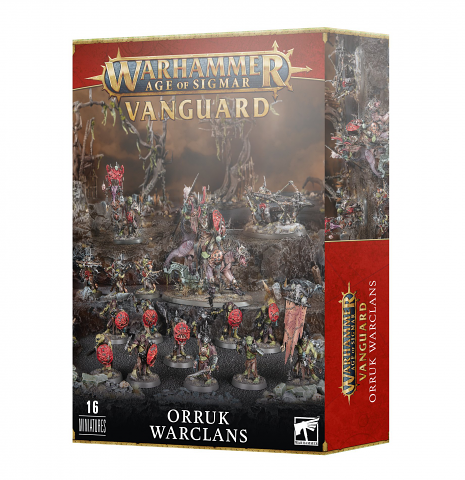
Vanguard: Orruk Warclans
The Orruk Warclans love to fight – in fact, it’s no lie to say that their entire culture revolves around conflict. The swamp-dwelling Kruleboyz are an unusual breed of orruk, for they prize deviousness over brute strength. To the Kruleboyz, winning by underhanded means is worth more than claiming victory in a straight fight – and they're very underhanded indeed...If you want to inflict sneaky tricks and blood-curdling violence on the Mortal Realms, this box makes an ideal start to an Orruk Warclans army – or an excellent way to expand your Kruleboyz collection – and will save you money compared to buying the kits individually. The box includes a Killaboss on a Great Gnashtoof to lead from the back, with a roster of vicious Gutrippaz and Boltboyz, plus a poison-spewing Belcha-banna and a powerful Killbow. It’s a full army in one box, ready to stalk from the swamps in games of Warhammer Age of Sigmar.This set includes the following multipart plastic models:– 1x Killaboss on Great Gnashtoof– 1x Murknob with Belcha-banna– 1x Beast-skewer Killbow– 3x Man-skewer Boltboyz– 10x GutrippazAll models are supplied with their appropriate bases.These miniatures are supplied unpainted and require assembly – we recommend using Citadel Plastic Glue and Citadel Colour paints.70-23£78.75£87.50save 10% -
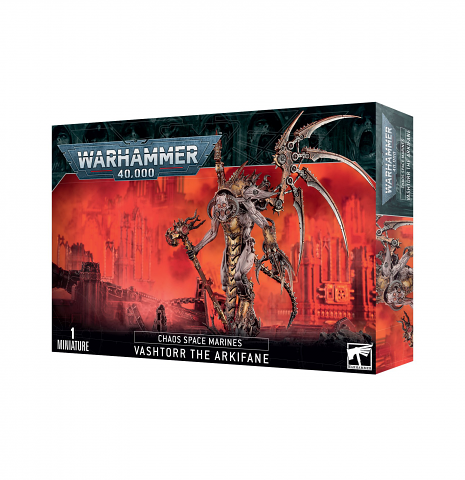
Vashtorr The Arkifane
Vashtorr is the Soul Forge King, a daemonic demigod of unrestrained invention and abominable artifice. When the Arkifane takes physical form, it is as a horror of pallid flesh stretched over infernal mechanisms, soaring to battle amidst a cloud of lightning and smog. Vashtorr deals destruction with every whirring step, unleashing techno gheist curses upon his foes even as he fashions enhancements for his indentured daemon engines from the raw stuff of realspace.This multipart plastic kit builds Vashtorr the Arkifane, master of daemon forges and manufactorums. This looming, otherworldly figure is covered in sinister cybernetic details – from the daemonic exhausts and chimneys clustered on his hunched back to the mechadendrites that squirm through the rubble of his scenic base. He wields a twisted blacksmith's hammer in one hand, while the other extends into a vicious machine claw with a built-in flame weapon. Vashtorr wears an armoured carapace with a segmented metal apron – he can alternatively be built without this armour, exposing more of the grotesque form beneath.Standing roughly five inches tall from his metal-shod hooves to the tips of his spindly wings, Vashtorr is an eye-catching figure on the battlefield – and a worthy player in the Great Game of the Chaos Gods.This kit comprises 47 plastic components, and comes with a Citadel 80mm Round Base. This miniature is supplied unpainted and requires assembly – we recommend using Citadel Plastic Glue and Citadel Colour paints.43-99£56.93£63.25save 10% -
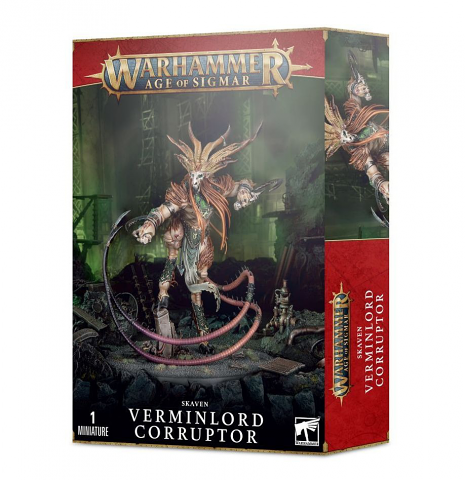
Verminlord Corruptor (Warbringer/Warpseer/Deceiver)
Horrific examples of pure pestilence given form, Verminlord Corruptors live up to their name, existing only to despoil and corrupt. Huge, powerful warriors capable of tearing most enemies apart even before their vile plague spells take hold, they hold absolute power over their underlings in the Clans Pestilens. Their plaguereaper sickles infect opponents with even the slightest nick – to go into battle with this most devious, this most cunning, this most malevolent of skaven is to sign your own putrid, diseased death-warrant.The Skaven Pestilens Verminlord Corruptor is armed with 2 plaguereapers. It has a skull head with broken horns and a mane of long hair.The multi-part plastic kit can optionally be used to assemble one of four other Verminlords. Whichever one you choose to assemble, the legs and body are used as the core to then add the following details to:Verminlord Warbringer is armed with a doom glaive and punch-dagger and is notable for featuring a spiked helmet.Verminlord Warpseer is armed with a doom glaive and scry-orb.Verminlord Deceiver is armed with a doomstar (in the shape of the Clan Eshin rune) and a warpstiletto. It’s head wears a mask and hood to hide its features.Skreech Verminking is armed with a plaguereaper and a doom glaive and has a unique half rotten face.The Verminlord Corruptor has 61 components and is supplied with a Citadel 120x90mm Oval base.90-21£66.60£74.00save 10% -
Victory at Sea Admiral Graf Spee & Admiral Scheer
The Deutschland-class of warships were relatively small, by battleship standards, but were well armoured and carried the type of armament traditionally seen only on battleships. This led to them being nicknamed ‘pocket battleships’. Superb commerce raiders, the Admiral Scheer successfully plied the Atlantic and Indian Oceans, disrupting merchant shipping wherever it went, whilst the Admiral Graf Spee was famously cornered during the Battle of the River Plate and scuttled herself soon after.
742411012£22.00£27.50save 20% -
Victory at Sea HMS Hood
At one time, the HMS Hood was the largest and possibly most famous ship in the world, representing the supremacy of British sea power. Though attached to Home Fleet, the Hood took part in the sinking of the French fleet at Oran. She was sunk by the Bismarck in 1941 after accurate shelling from the German ship caused a massive explosion on the Hood which sank within minutes, leaving only three survivors – certainly one of the more spectacular deaths of any capital ship.
742412018£16.40£20.50save 20% -
Victory at Sea IJN fleet box
For centuries, Japan's policy of seclusion (sakoku) saw it concentrate on coastal defences in order to repel foreign vessels. However, with the advances other maritime nations were making, it eventually became obvious that no longer would Japan be able to ignore the rest of the world. As an island power, it needed a modern navy. Turning to Britain for assistance, Japan quickly created a powerful modern fleet. It was this capable and confident navy that came out to fight the American Pacific Fleet.The Japanese understood the potential of air power early and created an effective carrier arm. In addition to the carriers, the Imperial Japanese Navy possessed a powerful battleship force, which included the largest and most powerful battleships in the world, the Yamato and the Musashi. The Imperial Japanese Navy's potential was demonstrated in the attack on Pearl Harbor in 1941. Using armour-piercing bombs and torpedoes, Japanese aircraft inflicted tremendous damage on the American Pacific fleet as it lay at anchor.Midway was the turning point of naval war in the Pacific and, from then on, the Imperial Japanese Navy was unable to make any headway against the increasing carrier strength of the US Navy. With the victorious Allies pushing towards the Japanese islands, the Imperial Japanese Navy fought desperately to keep them at bay. Kamikaze aircraft and other suicide weapons were deployed, and eventually warships of the Imperial Japanese Navy made death-rides against US forces.Contents:Kongō -class Battleship Kongō 1941Shōkaku-class Carrier - ZuikakuMogami-class Cruiser - Suzuya 1944Mogami-class Cruiser - Mikuma 1942Agano-class Cruiser - Yahagi 1943Kagero-class Destroyer 1941 x3Fighter Aircraft - Mitsubishi A6M2 Zero x 4 flightsShip Cards and Damage SlidersAssembly InstructionsShips are in Resin and Warlord Resin742411002£88.00£110.00save 20% -
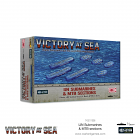
Victory at Sea IJN Submarines & MTB sections
Submarines: The Kaidai-7-class, or KD-7, was developed in the late 1930s, following on from the preceding KD-6 class. With a surface range of 8,000nm at 16kts, and a submerged endurance of 50nm at 5kts, they possessed a slightly better underwater performance to the late-model KD-6s and better surface speed (though not range) than the earlier members of that class. All members of the class were lost by mid-1944. Another ocean-going submersible using 533mm forward and aft torpedo tubes, it served in the South Pacific as well as the waters off Australia. I-177 sunk the hospital ship AHS Centaur off Stradbroke Island. It was presumed lost with all hands on 18 November 1944, while the I-176 was lost six months earlier off of the Solomon’s. There were 10 KD-7 submarines built overall.MTBs: Designed as a suicide craft, the Shin’yō either carried a powerful explosive or two depth charges. The depth charges were intended to be planted by the pilot of the boat, after which he would then make his escape. Although nearly 10,000 were built, they accounted for the sinking of only 5 ships, mainly landing craft.The Imperial Japanese Navy fielded a number of variants on a standard torpedo boat design, differing mainly in machinery fit which affected displacement, giving the illusion of more variety than existed in practice. 238 boats were built within these designations, all armed with two 18-inch torpedoes and 25mm or 13.2mm guns.Box contains:Kaidai-7-class Submarines x 3Shin’yo Kamikaze boat sections x 2T-14 MTB sections x2Ship Cards743211008£27.60£34.50save 20% -
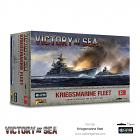
Victory at Sea Kriegsmarine fleet box
The Kriegsmarine had to be virtually rebuilt after the First World War. Forbidden to own capital ships and submarines, Germany nibbled away at first one clause of the Treaty of Versailles, then another, until a powerful navy force existed.At the outbreak of World War Two, relatively few capital ships were in commission, and no aircraft carriers. There was never any prospect of matching Britain in terms of capital ship numbers, but the qualitative advantage of the proposed super-battleships might have made a considerable difference. In any case, the Kriegsmarine was not a navy designed to tackle a major fleet head-on in fleet engagements. Instead, it was a commerce raiding force.German capital ships were built according to principles tried out in World War One; internal compartmentalisation and damage control measures made them very difficult to sink, while their efficient power plants ensured a good top speed, essential in a raider. Coupled with excellent fire control – using radar and other means – and big guns to make use of it, these vessels were extremely potent weapons.It has been said that Hitler never really understood naval warfare; be that as it may, the Kriegsmarine suffered from a lack of funding and materials, and from the internal politics of the Nazi leadership. Among its greatest detractors was Herman Goering, who connived constantly to ensure resources flowed into his Luftwaffe to the detriment of the navy. Major warship projects suffered from constant stops and starts as resources were allocated, then redistributed to other projects.Eventually, as the tide of war turned against Germany, Hitler gave up on his navy and transferred guns originally intended for ships to the coastal fortifications of the Atlantic Wall. The Kriegsmarine continued to fight on with dwindling resources. U-boats and destroyers remained a menace to allied shipping to the very end of the war.Contents:Scharnhorst-class Battleship - Scharnhorst 1939Admiral Hipper -class cruiser - Blücher 1940Admiral Hipper -class cruiser - Prinz Eugen 1940Admiral Hipper-class cruiser - Admiral Hipper 1939Königsberg -class cruiser - Köln 1941Königsberg -class cruiser - Königsberg 1940Type 1936A-class Destroyer x3Dive Bomber Aircraft - Junker Ju-87 Stuka flight x4 flightsShip Cards and Damage SlidersAssembly InstructionsShips are in Resin and Warlord Resin742411001£88.00£110.00save 20% -
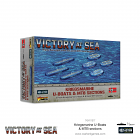
Victory at Sea Kriegsmarine U-Boats & MTB sections
Submarines: A long-ranged submersible, the Type IX was the most successful U-boat of the war, with each vessel averaging over 100,000 tons of shipping sunk. One Type IX, U-107, made the most successful convoy mission of the war, with nearly 100,000 tons of shipping sunk out of Freetown in Africa. The latest variants of this design were capable of ranges of more than 23,000 miles, allowing them to rove far in search of convoys, while their heavy load of torpedoes allowed them to keep pace with a convoy, attacking night after night.MTBs: The R1-class of R-Boat (from the German Räumboot, meaning minesweeper) was intended to be used as a shallow water minesweeper but, as the war went on, it became a multi-role craft. Its duties expanded to include patrol, antisubmarine, convoy escort, minelaying, and rescue operations. Some classes of R-Boat, such as the R310, were fitted with torpedo tubes, though performance was very modest compared to craft specifically designed for the role.The ultimate S-Boat to be operational in significant numbers was the S-100-class, which was produced from 1943 and was said to be the best fast patrol boat of its time. The S-100-class was nicknamed the Calotte, as it featured a rounded armoured bridge. It was powered by three Daimler-Benz engines giving it an overall capacity of around 7,500 hp and developing an outstanding top speed of 48 knots.Box contains:Type IX U-Boats x 3S-100 S-Boat sections x2R-Boat sections x2Ship Cards742411017£27.60£34.50save 20% -
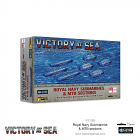
Victory at Sea Royal Navy Submarines & MTB sections
Submarines: Designed for use in North European and Mediterranean waters, the S-class was manoeuvrable with a noted ability to crash dive extremely quickly. Combined with a large salvo of torpedoes, this was a successful design of pre-war years that was soon updated and put back into production.MTBs: The Fairmile A was designed from the outset to use prefabricated components that could be produced by small businesses such as furniture manufacturers, which would then be assembled at shipyards. Capable of 25 knots, it mounted a 3-pounder gun and a pair of .303 machine guns, as well as Depth Charge.Designed with the form of a destroyer’s hull, the Fairmile B (like its predecessor, the Fairmile A) was intended primarily as a submarine-chaser, and so was fitted with Depth Charge. Manufactured in large numbers, the Fairmile B was also famously used on the raid on St. Nazaire.Capable of 26 knots, the Fairmile C was a motor gun boat, mounting two 2-pounders and eight machine guns of various calibres. It was mainly used for close escort duties and some clandestine missions.Nicknamed ‘Dog Boat,’ the Fairmile D was highly adaptable and could be fitted with a range of armament that meant it could act as both motor gun and torpedo boat. Some were used by the Royal Air Force for long range rescue of downed airmen.Box contains:S-Class Submarines x 3Fairmile MTB sections (A,B,C & D) x 4Ship Cards743212006£27.60£34.50save 20% -
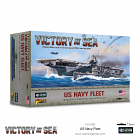
Victory at Sea US Navy fleet box
Although the United States of America contains a vast area of land, almost all of its allies and trading partners are overseas, and those interests require a powerful navy to support them.The US Navy possessed some of the largest and most modern battleships in the world at the outbreak of World War Two, and despite losses during the Japanese attack on Pearl Harbor, was able to maintain a powerful presence in the Pacific. However, in the vast reaches of that ocean the battleship was no longer the king of battle. It was fortunate for the Americans that the handful of aircraft carriers then in service with the US Navy escaped destruction; given later events it is doubtful that a pure battleship force could have defeated the Imperial Japanese Navy.The aircraft carrier became the main US naval asset during the war in the Pacific, which was very much a conflict between the air assets of opposing fleets. US carrier forces were hard-pressed early on but as the industrial might of the US was brought to bear, new carriers and air groups for them were deployed in such numbers that the enemy simply could not match their strength.US naval forces were primarily engaged in the Pacific, but some capital ships and larger numbers of destroyers were deployed to the Atlantic theatre where their primary opponents were German U-boats.Contents:New Mexico-class Battleship - USS New Mexico 1941-42Essex class Carrier - USS Essex 1944Northampton-class Cruiser - USS Houston 1940Northampton -class Cruiser - USS Chester 1941Portland-class Cruiser - USS Portland 1942Clemson-class Destroyer x3Fighter Bomber Aircraft - F4-U Corsair x4 flightsShip Cards and Damage SlidersAssembly InstructionsShips are in Resin and Warlord Resin742412002£88.00£110.00save 20% -
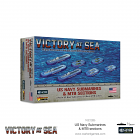
Victory at Sea US Navy Submarines & MTB sections
Submarines: The Gato-class of submarine was the first mass production US submarine class of the Second World War, forming the majority of the United States Navy’s submarine fleet of the war. It was the Gato-class, and the successors of her design that were largely responsible for the disruption of the Japanese merchant fleet. Individual Gato-class vessels were given names of marine creatures, with the lead of her class named for a type of small catshark.MTBs: The Elco mounted four torpedo tubes which, combined with its speed, made it a serious threat to larger ships. The largest PT boat used by the US Navy, the Elco is also notable for future President Kennedy commanding one. Crews of these boats relied on their smaller size, speed and manoeuvrability – and darkness – to survive.Box contains:Gato-Class Submarines x 3Elco ‘77 PT Boat sections x 2Elco ‘80 PT Boat Sections x 2Ship Cards743212005£27.60£34.50save 20% -
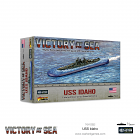
Victory at Sea USS Idaho
USS Idaho, the third of three ships of the New Mexico-class of Battleship, was the fourth vessel to bear the name. She was launched in June 1917 and commissioned in March 1919. She was armed with a battery of twelve 14” guns in four turrets and was protected with heavy armour plate (13.5” thick in the main belt).During the 20s and 30s, Idaho spent the majority of her time as part of the Pacific Fleet, conducting routine training exercises. She was modernised in the early 30s. During World War II, but before the United States’ entry into hostilities, she was assigned to join the Neutrality Patrols that protected American shipping during the Battle of the Pacific. Following the attack on Pearl Harbour, she was redeployed to the Pacific Theatre, along with her sister ships.For the remainder of the war she supported amphibious operations in the Pacific, shelling Japanese forces during the Gilbert and Marshall Islands and Philippines campaigns. She also supported the invasions of Peleliu, Iwo Jima and Okinawa. Idaho was present in Tokyo Bay when Japan formally surrendered on 2 September 1945. Idaho was decommissioned the next year and dismantled in 1947.Contains one ship in Resin and Warlord Resin742412052£16.40£20.50save 20% -
Victrix Little Big Men Models Transfers Pre-Punched
Victrix Little Big Men Models Transfers Pre-Punched
VXTRANSFERS1£6.00


Categories
News
WarGameStore Facebook page
12-05-2011 We decided it was easier to use Facebook to post regular updates on what's happening at WarGameStore, so for the latest updates check out this link:
Control Panel
Popular Pages
Help
Contact us
Copyright © 2003-2026 WarGameStore.
- Visa
- MasterCard
- PayPal
- Verified-by-VISA
- Sage