
Cart is Empty
- Home
- Manufacturers
- Warlord
Special offers
Warlord
Products
-

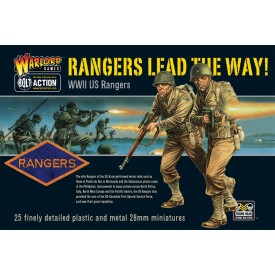
Rangers Lead The Way!
Rangers Lead The Way! contains enough plastic and metal components to make 25 US Rangers miniatures, including a host of different weapon and command model options.
Metal parts include Bangalore torpedoes, M2 flame-thrower, pick/mattocks, axes, wirecutters, heads with goggles, and US Ranger knuckle-knife. 8 unique metal heads representing well-known film characters. Weapons include M1 carbine, Springfield rifle (plus scoped version and also version with bayonet fitted), M3 ‘Grease Gun’ sub-machine gun, Browning Automatic Rifle (BAR), M1 Garand rifle (plus scoped version and version with bayonet fitted), Bazooka, Thompson sub-machine gun, Winchester combat shotgun, Browning M1911 pistol, hand grenades, bandoliers and ammunition pouches.
25mm round plastic bases
Note: Models supplied unassembled and unpaintedWGB-AI-02£35.10£41.50save 15% -
SD KFZ 251/16 Flammpanzerwagen Plastic Box Set
A conversion of the SdKfz 251/1 AusfD with two flame projectors mounted on the sides designated 251/16. The 2 main flame projectors were backed up by the usual shield-mounted MG34 or MG42 and an additional portable (albeit still attached by pipe to the halftrack) smaller calibre flamethrower which could be used by dismounted infantry. The crew would don protective headgear from full hoods to havy scarves and goggles. Plenty of conversion opportunities here!
This Warlord Games Box contains 1 plastic halftrack, leaflet and decal sheet
402012006£22.50£25.00save 10% -
Soviet 50mm Light Mortar and Flamethrower Teams
Soviet 50mm Light Mortar and Flamethrower Teams. This Warlord Games Blister pack contains 4 metal figures and 1 metal mortar.
WGB-RI-39£7.65£8.50save 10% -
Soviet Army Support Group (Winter)
This set contains:1 x Soviet HQ (Winter)1 x SovietMAxim MMG Team (Winter)1 x Soviet 82mm Medium Mortar Team (Winter)Soviet Army (Winter) HQLike the soldiers they commanded, many Soviet officers were inexperienced and lacked training at the beginning of the Great Patriotic War. Stalin's ruthless purge of officers of the Red Army in 1937 had denuded the organisation of leadership and left deep scars in the survivors' minds.Throughout the war, showing initiative was seen as a dangerous trait, and most Soviet officers would follow their orders to the letter even if they meant marching their men to certain death. Soviet operational leadership improved immeasurably over time, but the heavy casualties endured by the Red Army indicates that overall battlefield control remained a blunt instrument.Soviet Army (Winter) Medium Machine GunThe red army used the venerable Maxim Model 1910 as its medium machine gun throughout the war, the very same weapon that had served the Tsarist army in world war 1. It was a capable weapon that could be tripod-, sledge- or wheel-mounted and was often given a useful shield to help preserve the crew.The Maxim was so heavy and cumbersome, however, unlike most other Soviet weapons, the Germans seldom made use of captured examples.Soviet Army (Winter) Medium Mortar TeamThe standard Russian medium mortar of the war was the 82-PM-41 or 82mm battalion mortar Model 1941. This served alongside the otherwise similar 82mm Model 1937. Both were very effective and accurate weapons with a range of about 3,000 yards.82mm mortars were regarded as artillery rather than infantry weapons by the Russians and were usually massed together in batteries for battalion-level support.402214005£26.55£29.50save 10% -
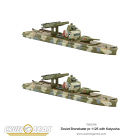
Soviet Bronekater pr.1125 with Katyusha
Often referred to as the “riverine tanks” or “Bronekater” the gunboats of the project 1124 and 1125 series played an important role in securing the large system of waterways of the Soviet Union.
Transportable by train from a river to other, it was designed to enter tunnels and cross bridges aboard wagon trains.
Bronekater pr.1125
This model represents Soviet Bronekater pr.1125 with M-13-M Rocket Launcher (Katyusha), 76.2mm F-34 T-34 Cast Turret and DShKM-2B Duel 12.7mm DshK Machine guns.
This model is of a rare ship that saw action as part of the Asov Flotilla during the Kerch-Eltigen Amphibious Operation, Kerch peninsula, Krim, November 1943.
The Soviet Bronekater pr.1125 with Katyusha comes in a pack of two to boost your Soviet Navy coastal forces.785001006£11.90£21.00save 43%
-
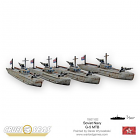
Soviet G-5 MTBs
The Soviets used many captured craft and received British and American MTBs that were used in their light flotillas. Their home-grown efforts, however, produced the peculiar looking G-5 light torpedo boats. They built scores of these aluminium boats, a material which was vulnerable to salt water.They were small and initially not very fast, but later models were 16 tons in weight and could manage 38 knots. Later G-5s could even achieve speeds of up to 40-48 knots if well maintained. They had a petrol engine. The late series even got up to 53 knots!Their main strike weapon was two torpedoes, stern launched, which was rare in WWII. They were dropped tail first into the water, so a sharp turn was necessary on launch to get out of the way. Unlike most other nations, the boats carried no cannon but were armed with one 12.7mm machine gun and normally two 7.62mm MMGs.785011002£11.90£19.50save 39% -
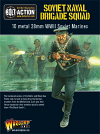
Soviet Naval Brigade Box Set
The Naval Infantry Brigades fought hard in most of the epic Soviet battles of WWII. Formed from tough sailors when the Russian army had been shattered by fast moving German forces, the Brigada Morskoi Pekhoty as they were known, were truly sailors armed with infantry weapons and ordered to the front or fighting in situ to defend their naval bases.
Clad in dark uniforms they soon earned the nick name "Black Death" or "Black Devils" from their foes.
They fought at Leningrad in one of the grimmest sieges in history and also were at Sevastopol in 1941when their base was overrun.They also fought in Finland, East Prussaia and launched raids against the Finns and Germans from Archangel.
Most famously they defended the grain elevator at Stalingrad for many days, losing appalling casualties but refusing to give in.
Warlord's Russian sailors are a tough bunch indeed.
Contains 10 metal miniatures - supplied unpaintedWGB-RI-05£21.20£26.50save 20% -
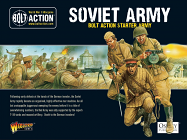
Soviet Starter Army
Soviet Starter Army (999 Points)SCALE: 28MM - 1/56TH66 INFANTRY1 VEHICLE1 ARTILLERY PIECE/WAR MACHINE3 CREWPlasticMetalFIGURE HEADInterchangeable heads system.REQUIRES ASSEMBLYThis product is supplied unassembled and unpainted. Glue and paints not included.Bolt Action Points ValuesDescription Value First Lieutenant& one extra rifleman 85 Medic& one extra rifleman (regular) 85 Infantry Squad (11) 3 SMG, LMG 139 Infantry Squad (11) 3 SMG, LMG 139 Infantry Squad (11) 3 SMG, LMG 139 Infantry Squad (11) 3 SMG, LMG 139 Inexperienced Infantry Squad (11) NCO SMG, LMG 0 82mm Medium Mortar Team 50 Anti-tank Rifle Team 30 T34/85 Medium Tank (regular) 235 Total 999 This army deal is made up of the following:1x plastic T34/85 medium tank1x Soviet 82mm mortar team1x metal Soviet officer(random selection)1x metal Medic8 plastic Soviet body sprues5 plastic Soviet weapon sprues402614001£88.20£104.00save 15% -
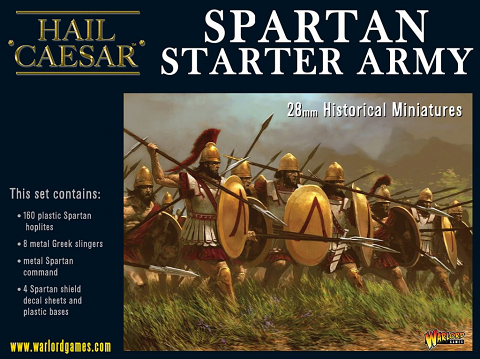
Spartan Starter Army
This box set contains:160 Plastic Spartan hoplites8 Metal Greek slingersMetal Spartan command4 Spartan shield decal sheets and plastic basesThe Spartan command would typically be the finest group of warriors amongst the troop, they'd have the duty to empower their men and hold the line at whatever cost.The Spartans are possibly the most famous fighting men in history, and rightly so! Spartan Hoplites were respected and feared throughout Greece, and it was long thought that no land power could stand against them. Lacedaemon, with Sparta as its capital, stood firm against the imperial ambitions of the Athenians.Those too poor to fight as a hoplite would serve as lightly equipped infantry, usually with a javelin, stones or a sling. Lead shot was often used by the Greeks, which would be carried in small bags. These lead bullets were sometimes inscribed with such messages as “Take this!”Models supplied unassembled and unpainted109914801£80.10£94.00save 15% -
SPQR: Death or Glory Rulebook
SPQR v.2 Rulebook. Contents details and price to followRelease Date March 24th 2021151010002£25.00£30.00save 17% -
SPQR: Germania - Warriors
Each block of warriors in a Germanic warband would typically be related, by oath if not blood. This formed a tight cohesiveness, with warriors taking the deaths of those next to them somewhat personally. Their natural ferociousness combined with this unity made them extremely tough to beat, as the Romans discovered.Includes 12 infantry in Warlord Resin152214009£22.00£27.50save 20% -
SPQR: Mercenaries - Numidian Skirmishers
While Numidians much preferred the use of cavalry, some infantry were used as skirmishers. Trained in the use of javelins from an early age, they were superb hunters haling from nomadic tribes where such skills were used every day. In SPQR, Numidian skirmishers are particularly adept at utilising the Hit & Run rule, snagging a bravery bonus for any of these checks. Contains twelve Warlord Resin infantry
152219005£22.00£27.50save 20% -
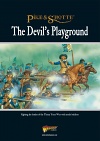
The Devil's Playground - Pike & Shotte Supplement
The Thirty Years War was a series of conflicts that ravaged large areas of Europe, especially the German provinces, from 1618 to 1648. These conflicts centred on the Habsburg Holy Roman Emperors, Ferdinand II and Ferdinand III, and their opponents. Although viewed by many as a religious war between Catholic and Protestant nations, its roots and causes were also politically motivated. The combination of religious fervour and the political ambition of the European superpowers were to pit vast armies and mighty leaders against each other. The devastation caused by decades of fighting had truly turned Europe into the ‘Devil’s Playground’.
This supplement for Pike & Shotte describes the history, armies, personalities and battles of the Thirty Years War. Included are scenarios based on some of the famous battles and army lists for the main protagonists.
A copy of the Pike & Shotte rulebook is required to use this supplement.
WGP-002£19.80£22.00save 10% -
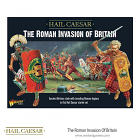
The Roman Invasion of Britain - Hail Caesar Starter Set
In 43 AD the Roman army landed on the south coast of a small island called Britain seeking to add this latest territory to Emperor Claudius’ vast empire – an empire that already spanned much of the known world.The Roman Invasion of Britain starter set contains:Softback A5 Hail Caesar rulebookQuick start guide80 hard plastic Celtic Infantry40 hard plastic Roman LegionariesHard plastic Roman Scorpion catapult & crew1 metal Imperial Roman commander on horse1 metal Celt chieftain on horseCeltic and Roman waterslide shield decalsTwelve 6-sided diceReference sheet and casualty countersThe Roman forces, spearheaded by the legionaries in their segmented armour and large scutum shields, were highly trained, equipped and disciplined. Backed by the deadly Scorpion catapults how could these barbarians stop them?Arrayed against them the fiercely independent British tribes – many daubed in woad war paint and with spiky, limed hair – determined to retain their own rule. Each warrior a skilled, ferocious fighter defending their home and family, they would make these Roman invaders pay in blood.This Hail Caesar starter set allows you to build your forces – both Roman invader and defiant Britons – as you fight for control of the island in massed battle!Models supplied unassembled and unpainted101510001£70.20£78.00save 10% -
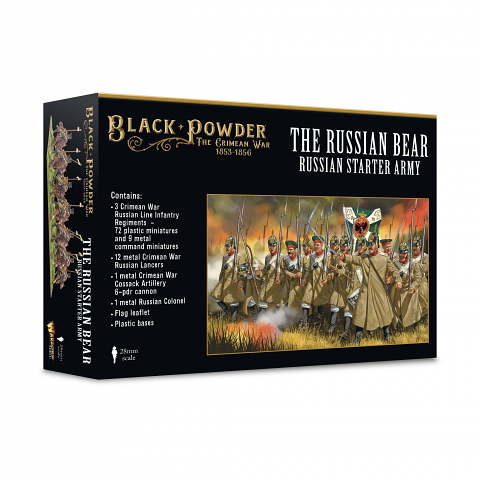
The Russian Bear - Crimean War Russian starter army
At the beginning of the Crimean War the Russian military was the largest in Europe, containing just under one million men, 930,000 of which belonged to the land forces, though size is not everything…The bulk of the Imperial Russian Army that faced the allied nations of Great Britain, France, Sardinia, and the Ottomans comprised the stoic infantrymen clad in their green and white uniforms, often covered by a drab greatcoat, but conscripted mostly from poor peasants and serfs. The individual soldier was on the whole poorly trained, equipped and led. Despite these shortcomings nobody could doubt their bravery – the soldiers were used to privation and sacrifice throughout warfare with the great Ottoman Empire for many years.Singing their hymns to Mother Russia, the simple peasant stock that filled Russian regiments had a fervent belief in their Tsar and an equal belief in the bayonet due to their poor musketry skills and old weapons.Box Contains:72 Hard Plastic Crimean War Russian Line Infantry9 Metal Russian Line Infantry Command Figures12 Metal Crimean War Russian Lancers1 Metal Crimean War Cossack Artillery 6-Pdr Cannon with Crew1 Metal Russian Colonel (Mounted)Full-colour Flag LeafletPlastic Bases302613802£96.30£107.00save 10% -
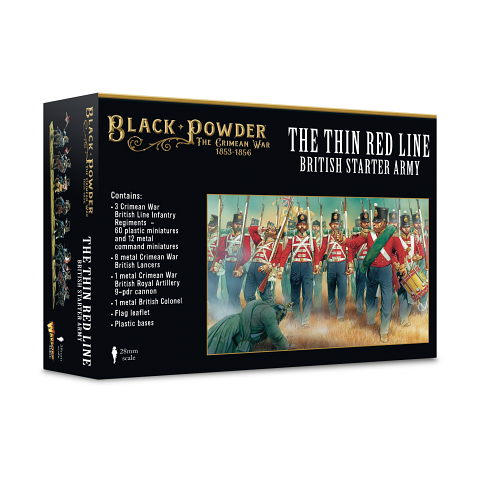
The Thin Red Line - Crimean War British starter army
The thin red line! There are few more glorious military spectacles than the measured tread of Her Majesty’s line regiments wheeling by division the marching at their steady pace towards their enemies – unflinching, unafraid, and unstoppable.If war has any glory in it at all, it can be found in the splendid turnout and resplendence of the British Army and its fabulously dressed soldiery of the Crimean War.The men of the line regiments, of which over fifty served in the campaign into the Crimea, may not have been saints, and many had enlisted simply to avoid jail or the poorhouse, but they behaved magnificently when put to the test against the Russians.At the Alma, at Sevastopol, at Inkerman – the redcoats did their bit for Queen and country five-fold, many losing their lives or their limbs. The Crimean War has been described as the first modern war, but has just as accurately been described as the last old-fashioned war – the troops being led to death or glory by officers who had fought at Waterloo all those years earlier! Sadly neglect, incompetent commanders, and disease killed far more British soldiers than the Russians ever did – a poor reward for extraordinary service.Box Contains:60 Hard Plastic Crimean War British Line Infantry12 Metal British Line Infantry Command Figures8 Metal Crimean War British Lancers1 Metal Crimean War British Royal Artillery 9-Pdr Cannon with Crew1 Metal British Colonel (Mounted)Full-colour Flag LeafletPlastic Bases302613801£96.30£107.00save 10% -
Totenrotte Starter Army
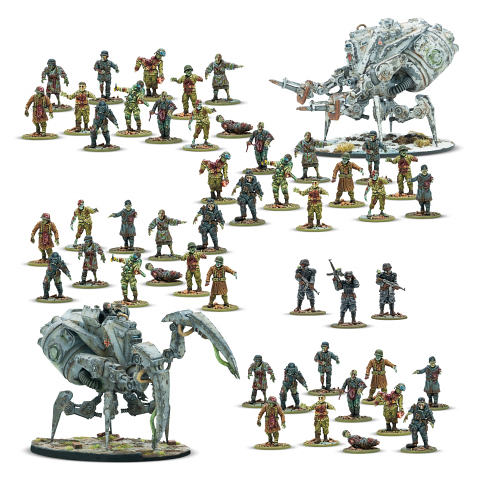
A Totenrotte is an Axis military formation comprised of the walking dead. Initially the Totenrotten had the simple directive of deploying Totenkorps amongst enemy lines, sowing physical and psychological chaos amongst the enemy throughout Europe.However, with newly emergent technology originating from the minds of Axis scientists, led by the research of Albrecht von Zögling, which replicates the effects of the Dresden Rift on the newly dead, the operations of the Totenrotten have greatly expanded in a sinister new direction – recruitment. The Totenrotten now incorporate the Sd.Kfz. 501/1 Nachtzehrer, armoured walkers which can apply von Zögling’s serum on the battlefield itself, and immediately redeploy the newly dead against their former comrades in arms.This starter army contains the following:1x Totenrotte Platoon Commander with Bodyguards (3 Warlord Resin Miniatures)45x plastic Totenkorps miniatures2x Sd.Kfz. 501/1 Nachtzehrer (can also be assembled as Sd.Kfz 501/4 Infernospinne)MDF and Plastic BasesAssembly guides8 x Grey Rift Dice8 x Grey Order dice with black engravings.452610009£99.00£110.00save 10% -
US Airborne Starter Army
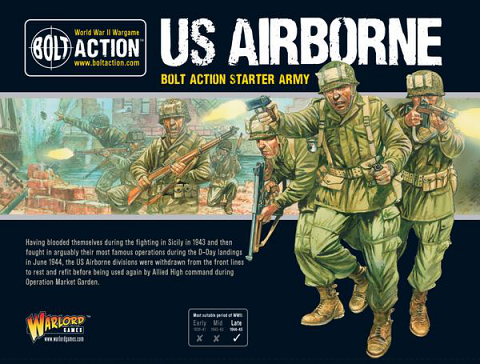
From their role in the ill-fated Operation Market Garden to the crossing of the River Rhine and the push into the German homeland these battle-hardened fighting men have been immortalised in film and television.This great value boxed set gives you all you need to start playing with the elite forces of the US Airborne. Equipped in the M-43 paratrooper uniforms, introduced in 1944 they are perfect for actions during Operation Market Garden, the liberation of mainland Europe, crossing the Rhine or the final push into Germany itself!Whether you plan to field them as the 101st 'Screaming Eagles' , 82nd 'All American', 17th 'Thunder from Heaven' or 13th 'Golden Unicorns' Airborne Divisions this starter force is built around a strong core of battle-hardened paratroopers and vital support teams the US Airborne are a match for all but the most heavily equipped opponents.US Airborne Starter Army contains:36x US Airborne infantry (plastic)4x US Airborne HQ figures (metal)1x US Airborne .50 Cal HMG team (metal)1x US Airborne medium mortar team (metal)1x US Airborne 57mm anti-tank gun (metal)Assembly instructionsFull-colour decal sheetsPlastic bases409913114£58.50£69.00save 15% -
US Army 75mm Howitzer
Pack contains 1 metal gun and 3 metal crew figures.WGB-AI-33£17.10£19.00save 10% -
US Army Jeep with 50 Cal HMG
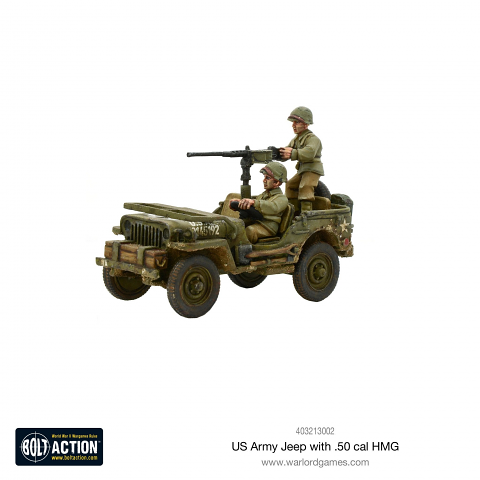
In June 1940 the American army asked for a vehicle that could "go-anywhere". The answer was the four-wheel drive Willys MB and the Ford GPW, both models referred to as 'Jeeps'. 630,000 jeeps were produced by the end of the war. This version has a pintle mounted HMG with a 360-degree arc of fire.
In games of Bolt Action Jeeps can be included in any Armoured Platoon and have the Recce special rule.
Resin and metal vehicle with metal crew.
403213002£18.45£20.50save 10% -
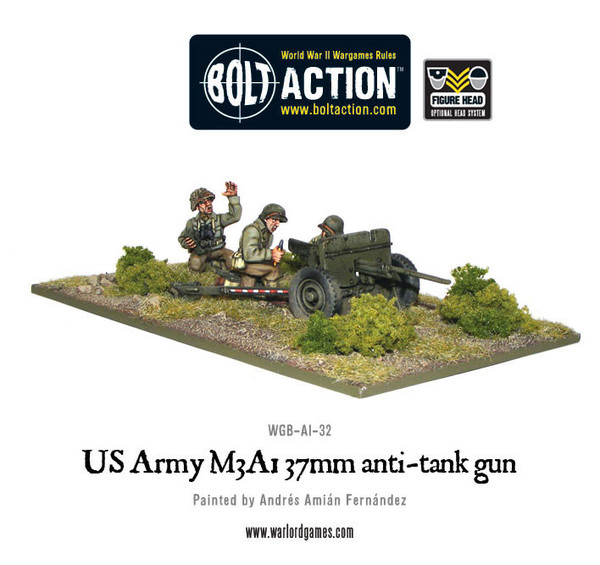
US Army M1 37mm anti-tank gun
The 37 mm Gun M3 was the first dedicated anti-tank gun fielded by United States forces. Introduced in 1940, it became their standard with its size enabling it to be pulled by a jeep. However, the continuing improvement of German tanks quickly rendered the 37 mm ineffective, and by 1943 it was being gradually replaced in the European and Mediterranean theatres by the more powerful British-developed 57 mm Gun M1.
In the Pacific, where the Japanese tank threat was less significant, the M3 remained in service until the end of the war. Like many other light anti-tank guns, the M3 was widely used in the infantry support role and as an anti-personnel weapon, firing high-explosive and canister rounds.
The M3 saw action for the first time during the defence of the Philippines in December 1941. It went on to become a factor in the Guadalcanal Campaign, where it was successfully employed against both Japanese armour and infantry.
Throughout the war it remained effective against Japanese vehicles, which were thinly armoured and were rarely committed in large groups. The light weight of the gun made it easy to move through difficult terrain, against enemy fortifications the M3 was only somewhat effective because of its small high-explosive projectile.
Its overall effectiveness and ease of use meant the gun remained in service with the Marine Corps and with some Army units in the Pacific until the end of the war.
Pack contains 1 metal gun and 3 metal crew figures.WGB-AI-32£13.05£14.50save 10% -
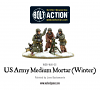
US Army Medium Mortar (Winter)
This Warlord pack contains a 3 man US HQ Squad in winter fatigues plus 1 mortar: Our latest Warlord Range is perfect for bringing the battles into the winter of 1944-45. Packed with character that really shows how unprepared for the truly bitter winter, which hit Europe that year, the US forces really were.
WGB-WAI-25£9.00 -
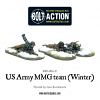
US Army MMG (Winter)
This Warlord pack contains a 3 man US MMG Squad in winter fatigues: Our latest Warlord Range is perfect for bringing the battles into the winter of 1944-45. Packed with character that really shows how unprepared for the truly bitter winter, which hit Europe that year, the US forces really were.
WGB-WAI-21£9.00 -
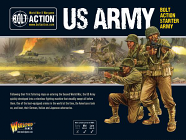
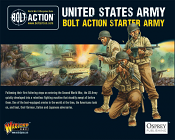
US Army Starter Army (2019)
One of the best-equipped armies in the world at the time, the Americans took on, and beat, their German, Italian and Japanese adversaries.This boxed set contains a great starting point for a force of US Army troops in uniforms ideal for service in the Mediterranean, Italy, or North West Europe between 1941 and 1945. This starter force has all bases covered - firepower, boots on the ground and speed – providing the perfect core for your GI army. Check your weapons and load up with ammo. America has joined the fight against the Axis – send the boys in!US Army starter army contains:36x multi-pose US Army infantry (plastic)1x M3A1 half-track (plastic)1x US Army 105mm artillery (metal)1x US Army MMG team (metal)1x US Army medium mortar team (metal)1x M4 Sherman medium tank (plastic)Assembly and painting instructions, full-colour decal sheets, vehicle damage markers & stat cards and plastic bases409913016£104.40£123.00save 15% -
US Army Starter Army 1000 Points
This army deal is made up of the following:10 Sprues of plastic American Infantry6 American Weapon SpruesMetal US Army 60mm mortar teamMetal 50 Cal TeamPlastic M3A1 Half TrackPlastic M4 Sherman medium tankFor a total of:50 Infantry2 Vehicles2 Artillery Pieces/War Machines7 CrewPlastic/MetalFigure Head - Interchangeable heads system.Requires AssemblyThis product is supplied unassembled and unpainted. Glue and paints not included.A complete 1000 point starter set for the US Army. Points values below:Bolt Action Points ValuesDescription ValueSecond Lieutenant& One extra Riflemen 60Infantry Squad (12) NCO SMG, BAR 128Infantry Squad (12) NCO SMG, BAR 128Infantry Squad (12) NCO SMG, BAR 128Infantry Squad (12) NCO SMG, BAR 12860mm Mortar Team 35.50Cal Team 70M3, +2 .30Cal Teams 129Sherman 195Total 1001409913008D£90.00 -
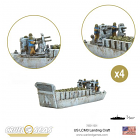
US LCM3 Landing Craft
Built by several different manufacturers in different designs the landing craft mechanized (LCM) bore the brunt of transport duties in some of the most famous landings in history.The LCM (3) Higgins is perhaps the most famous, at a length of 50 feet (15 m), it had the capacity to carry one 30-ton tank (e.g. M4 Sherman), 60 troops, or 60,000 lb (27,000 kg) of cargo.Contains:4x metal LCM3 Landing craftShip cardWake marker785011001£11.90£19.50save 39% -
US Navy PT boat flotilla
US Navy PT boat flotilla
On December 7th, 1941, the US Navy could only boast 3 squadrons of motor torpedo boats, or PT boats (patrol torpedo) as they were named. PT squadron 1 was based on Pearl Harbor and the 12 boats opened fire on the incoming Japanese bombers, claiming 2 planes downed for sure and others damaged. Squadron 2 was based in Manila Bay of the Philippines and had a similar introduction to their war, shooting down a few attackers and learning that fast boats were a tricky target for bombers. Squadron 3 was in New York working up and would later see great service in Guadalcanal.The PT boats fought all over the globe, from Pearl Harbor to the Philippines, the Adriatic and Mediterranean and also in the English Channel. They achieved many successes, particularly in the last two years of the Pacific War they accounted for many stalking float planes and many hundreds of barges which were the lifeblood of the overextended Japanese army. This barge hunting was a gruelling business and needed a certain ruthlessness on the behalf of the American crews, Japanese soldiers and sailors being loath to surrender, hence a grizzly end to many a barge crew.Contains: Six PT boats (3x Elco & 3x Higgins)782011002£16.80£21.00save 20% -
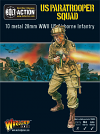
US Paratrooper Squad
These US Airborne models are ideal to represent the 101st ‘Screaming Eagles’, 82nd ‘All American’, or the 17th ‘Thunder from Heaven’ divisions – arguably some of the toughest of the US army. Aggressive and innovative, these elite troops were eager to take the war to ‘the Krauts’ – something they did so successfully. They were ordinary citizen soldiers, but highly trained and motivated, superbly equipped and packed with firepower as only an American force can be! As brilliantly highlighted in the superb TV series Band of Brothers, US Airborne troops were always at the sharp end of the action and weren’t found wanting.
This Warlord Games box set contains a 10-man US Paratrooper Squad: • 1 NCO and two soldiers with SMGs • 2-man LMG team • 5 soldiers with rifle/carbine • 8 25mm round and 2 lozenge plastic bases
402213101£23.85£26.50save 10% -
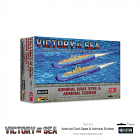
Victory at Sea Admiral Graf Spee & Admiral Scheer
The Deutschland-class of warships were relatively small, by battleship standards, but were well armoured and carried the type of armament traditionally seen only on battleships. This led to them being nicknamed ‘pocket battleships’. Superb commerce raiders, the Admiral Scheer successfully plied the Atlantic and Indian Oceans, disrupting merchant shipping wherever it went, whilst the Admiral Graf Spee was famously cornered during the Battle of the River Plate and scuttled herself soon after.
742411012£22.00£27.50save 20% -
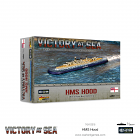
Victory at Sea HMS Hood
At one time, the HMS Hood was the largest and possibly most famous ship in the world, representing the supremacy of British sea power. Though attached to Home Fleet, the Hood took part in the sinking of the French fleet at Oran. She was sunk by the Bismarck in 1941 after accurate shelling from the German ship caused a massive explosion on the Hood which sank within minutes, leaving only three survivors – certainly one of the more spectacular deaths of any capital ship.
742412018£16.40£20.50save 20% -
Victory at Sea IJN fleet box
For centuries, Japan's policy of seclusion (sakoku) saw it concentrate on coastal defences in order to repel foreign vessels. However, with the advances other maritime nations were making, it eventually became obvious that no longer would Japan be able to ignore the rest of the world. As an island power, it needed a modern navy. Turning to Britain for assistance, Japan quickly created a powerful modern fleet. It was this capable and confident navy that came out to fight the American Pacific Fleet.The Japanese understood the potential of air power early and created an effective carrier arm. In addition to the carriers, the Imperial Japanese Navy possessed a powerful battleship force, which included the largest and most powerful battleships in the world, the Yamato and the Musashi. The Imperial Japanese Navy's potential was demonstrated in the attack on Pearl Harbor in 1941. Using armour-piercing bombs and torpedoes, Japanese aircraft inflicted tremendous damage on the American Pacific fleet as it lay at anchor.Midway was the turning point of naval war in the Pacific and, from then on, the Imperial Japanese Navy was unable to make any headway against the increasing carrier strength of the US Navy. With the victorious Allies pushing towards the Japanese islands, the Imperial Japanese Navy fought desperately to keep them at bay. Kamikaze aircraft and other suicide weapons were deployed, and eventually warships of the Imperial Japanese Navy made death-rides against US forces.Contents:Kongō -class Battleship Kongō 1941Shōkaku-class Carrier - ZuikakuMogami-class Cruiser - Suzuya 1944Mogami-class Cruiser - Mikuma 1942Agano-class Cruiser - Yahagi 1943Kagero-class Destroyer 1941 x3Fighter Aircraft - Mitsubishi A6M2 Zero x 4 flightsShip Cards and Damage SlidersAssembly InstructionsShips are in Resin and Warlord Resin742411002£88.00£110.00save 20% -
Victory at Sea IJN Submarines & MTB sections
Submarines: The Kaidai-7-class, or KD-7, was developed in the late 1930s, following on from the preceding KD-6 class. With a surface range of 8,000nm at 16kts, and a submerged endurance of 50nm at 5kts, they possessed a slightly better underwater performance to the late-model KD-6s and better surface speed (though not range) than the earlier members of that class. All members of the class were lost by mid-1944. Another ocean-going submersible using 533mm forward and aft torpedo tubes, it served in the South Pacific as well as the waters off Australia. I-177 sunk the hospital ship AHS Centaur off Stradbroke Island. It was presumed lost with all hands on 18 November 1944, while the I-176 was lost six months earlier off of the Solomon’s. There were 10 KD-7 submarines built overall.MTBs: Designed as a suicide craft, the Shin’yō either carried a powerful explosive or two depth charges. The depth charges were intended to be planted by the pilot of the boat, after which he would then make his escape. Although nearly 10,000 were built, they accounted for the sinking of only 5 ships, mainly landing craft.The Imperial Japanese Navy fielded a number of variants on a standard torpedo boat design, differing mainly in machinery fit which affected displacement, giving the illusion of more variety than existed in practice. 238 boats were built within these designations, all armed with two 18-inch torpedoes and 25mm or 13.2mm guns.Box contains:Kaidai-7-class Submarines x 3Shin’yo Kamikaze boat sections x 2T-14 MTB sections x2Ship Cards743211008£27.60£34.50save 20% -
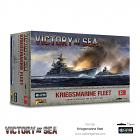
Victory at Sea Kriegsmarine fleet box
The Kriegsmarine had to be virtually rebuilt after the First World War. Forbidden to own capital ships and submarines, Germany nibbled away at first one clause of the Treaty of Versailles, then another, until a powerful navy force existed.At the outbreak of World War Two, relatively few capital ships were in commission, and no aircraft carriers. There was never any prospect of matching Britain in terms of capital ship numbers, but the qualitative advantage of the proposed super-battleships might have made a considerable difference. In any case, the Kriegsmarine was not a navy designed to tackle a major fleet head-on in fleet engagements. Instead, it was a commerce raiding force.German capital ships were built according to principles tried out in World War One; internal compartmentalisation and damage control measures made them very difficult to sink, while their efficient power plants ensured a good top speed, essential in a raider. Coupled with excellent fire control – using radar and other means – and big guns to make use of it, these vessels were extremely potent weapons.It has been said that Hitler never really understood naval warfare; be that as it may, the Kriegsmarine suffered from a lack of funding and materials, and from the internal politics of the Nazi leadership. Among its greatest detractors was Herman Goering, who connived constantly to ensure resources flowed into his Luftwaffe to the detriment of the navy. Major warship projects suffered from constant stops and starts as resources were allocated, then redistributed to other projects.Eventually, as the tide of war turned against Germany, Hitler gave up on his navy and transferred guns originally intended for ships to the coastal fortifications of the Atlantic Wall. The Kriegsmarine continued to fight on with dwindling resources. U-boats and destroyers remained a menace to allied shipping to the very end of the war.Contents:Scharnhorst-class Battleship - Scharnhorst 1939Admiral Hipper -class cruiser - Blücher 1940Admiral Hipper -class cruiser - Prinz Eugen 1940Admiral Hipper-class cruiser - Admiral Hipper 1939Königsberg -class cruiser - Köln 1941Königsberg -class cruiser - Königsberg 1940Type 1936A-class Destroyer x3Dive Bomber Aircraft - Junker Ju-87 Stuka flight x4 flightsShip Cards and Damage SlidersAssembly InstructionsShips are in Resin and Warlord Resin742411001£88.00£110.00save 20% -
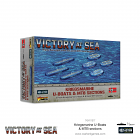
Victory at Sea Kriegsmarine U-Boats & MTB sections
Submarines: A long-ranged submersible, the Type IX was the most successful U-boat of the war, with each vessel averaging over 100,000 tons of shipping sunk. One Type IX, U-107, made the most successful convoy mission of the war, with nearly 100,000 tons of shipping sunk out of Freetown in Africa. The latest variants of this design were capable of ranges of more than 23,000 miles, allowing them to rove far in search of convoys, while their heavy load of torpedoes allowed them to keep pace with a convoy, attacking night after night.MTBs: The R1-class of R-Boat (from the German Räumboot, meaning minesweeper) was intended to be used as a shallow water minesweeper but, as the war went on, it became a multi-role craft. Its duties expanded to include patrol, antisubmarine, convoy escort, minelaying, and rescue operations. Some classes of R-Boat, such as the R310, were fitted with torpedo tubes, though performance was very modest compared to craft specifically designed for the role.The ultimate S-Boat to be operational in significant numbers was the S-100-class, which was produced from 1943 and was said to be the best fast patrol boat of its time. The S-100-class was nicknamed the Calotte, as it featured a rounded armoured bridge. It was powered by three Daimler-Benz engines giving it an overall capacity of around 7,500 hp and developing an outstanding top speed of 48 knots.Box contains:Type IX U-Boats x 3S-100 S-Boat sections x2R-Boat sections x2Ship Cards742411017£27.60£34.50save 20% -
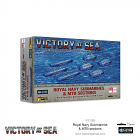
Victory at Sea Royal Navy Submarines & MTB sections
Submarines: Designed for use in North European and Mediterranean waters, the S-class was manoeuvrable with a noted ability to crash dive extremely quickly. Combined with a large salvo of torpedoes, this was a successful design of pre-war years that was soon updated and put back into production.MTBs: The Fairmile A was designed from the outset to use prefabricated components that could be produced by small businesses such as furniture manufacturers, which would then be assembled at shipyards. Capable of 25 knots, it mounted a 3-pounder gun and a pair of .303 machine guns, as well as Depth Charge.Designed with the form of a destroyer’s hull, the Fairmile B (like its predecessor, the Fairmile A) was intended primarily as a submarine-chaser, and so was fitted with Depth Charge. Manufactured in large numbers, the Fairmile B was also famously used on the raid on St. Nazaire.Capable of 26 knots, the Fairmile C was a motor gun boat, mounting two 2-pounders and eight machine guns of various calibres. It was mainly used for close escort duties and some clandestine missions.Nicknamed ‘Dog Boat,’ the Fairmile D was highly adaptable and could be fitted with a range of armament that meant it could act as both motor gun and torpedo boat. Some were used by the Royal Air Force for long range rescue of downed airmen.Box contains:S-Class Submarines x 3Fairmile MTB sections (A,B,C & D) x 4Ship Cards743212006£27.60£34.50save 20% -
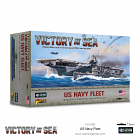
Victory at Sea US Navy fleet box
Although the United States of America contains a vast area of land, almost all of its allies and trading partners are overseas, and those interests require a powerful navy to support them.The US Navy possessed some of the largest and most modern battleships in the world at the outbreak of World War Two, and despite losses during the Japanese attack on Pearl Harbor, was able to maintain a powerful presence in the Pacific. However, in the vast reaches of that ocean the battleship was no longer the king of battle. It was fortunate for the Americans that the handful of aircraft carriers then in service with the US Navy escaped destruction; given later events it is doubtful that a pure battleship force could have defeated the Imperial Japanese Navy.The aircraft carrier became the main US naval asset during the war in the Pacific, which was very much a conflict between the air assets of opposing fleets. US carrier forces were hard-pressed early on but as the industrial might of the US was brought to bear, new carriers and air groups for them were deployed in such numbers that the enemy simply could not match their strength.US naval forces were primarily engaged in the Pacific, but some capital ships and larger numbers of destroyers were deployed to the Atlantic theatre where their primary opponents were German U-boats.Contents:New Mexico-class Battleship - USS New Mexico 1941-42Essex class Carrier - USS Essex 1944Northampton-class Cruiser - USS Houston 1940Northampton -class Cruiser - USS Chester 1941Portland-class Cruiser - USS Portland 1942Clemson-class Destroyer x3Fighter Bomber Aircraft - F4-U Corsair x4 flightsShip Cards and Damage SlidersAssembly InstructionsShips are in Resin and Warlord Resin742412002£88.00£110.00save 20% -
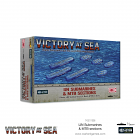
Victory at Sea US Navy Submarines & MTB sections
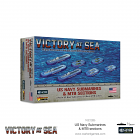
Submarines: The Gato-class of submarine was the first mass production US submarine class of the Second World War, forming the majority of the United States Navy’s submarine fleet of the war. It was the Gato-class, and the successors of her design that were largely responsible for the disruption of the Japanese merchant fleet. Individual Gato-class vessels were given names of marine creatures, with the lead of her class named for a type of small catshark.MTBs: The Elco mounted four torpedo tubes which, combined with its speed, made it a serious threat to larger ships. The largest PT boat used by the US Navy, the Elco is also notable for future President Kennedy commanding one. Crews of these boats relied on their smaller size, speed and manoeuvrability – and darkness – to survive.Box contains:Gato-Class Submarines x 3Elco ‘77 PT Boat sections x 2Elco ‘80 PT Boat Sections x 2Ship Cards743212005£27.60£34.50save 20% -
Victory at Sea USS Idaho
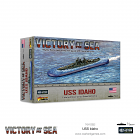
USS Idaho, the third of three ships of the New Mexico-class of Battleship, was the fourth vessel to bear the name. She was launched in June 1917 and commissioned in March 1919. She was armed with a battery of twelve 14” guns in four turrets and was protected with heavy armour plate (13.5” thick in the main belt).During the 20s and 30s, Idaho spent the majority of her time as part of the Pacific Fleet, conducting routine training exercises. She was modernised in the early 30s. During World War II, but before the United States’ entry into hostilities, she was assigned to join the Neutrality Patrols that protected American shipping during the Battle of the Pacific. Following the attack on Pearl Harbour, she was redeployed to the Pacific Theatre, along with her sister ships.For the remainder of the war she supported amphibious operations in the Pacific, shelling Japanese forces during the Gilbert and Marshall Islands and Philippines campaigns. She also supported the invasions of Peleliu, Iwo Jima and Okinawa. Idaho was present in Tokyo Bay when Japan formally surrendered on 2 September 1945. Idaho was decommissioned the next year and dismantled in 1947.Contains one ship in Resin and Warlord Resin742412052£16.40£20.50save 20% -
Waffen SS Warlord Games
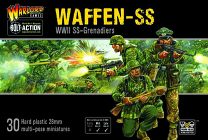
Waffen SS Warlord Games comprises a brand new plastic frame packed with superbly sculpted detail, including camouflage on the helmets, loose weaponry and equipment, and even a broom handled Mauser pistol.
This Warlord Games box set also includes optional heads for SS-Handschar.
Contains:
- Plastic components to make 30 mid-late war Waffen SS Grenadier figures. Includes options for different weapon configurations and command models.
- Equipment included: STG44 assault rifle, Kar 98K rifle, MG42 light machine gun, MP40 sub-machine gun, Gewehr 43 rifle, stick grenades, Panzerfaust, field glasses and a broom-handled Mauser pistol
- Round plastic bases (25mm diameter).
- Construction leaflet.
- Full-colour waterslide decals.
402012101£33.30£37.00save 10% -
Waffen-SS support group
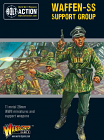
The armed wing of the Nazi Party, the extremely well-equipped Waffern-SS were rightly feared by their opponents - both for their fighting ability and uncompromising ferocity.Supported by two weapons with a high rate of fire - the deadly MG42 medium machine gun (nicknamed Hitler's Buzzsaw by the allies) and the Granatwerfer 34 8cm medium mortar - the Waffen-SS, in their trademark camouflaged uniforms were a truly dangerous foe to face.Contains:2 officers1 Medic1 2-man Forward Observer team1 medium mortar team1 MG42 MMG teamBases402212107£26.55£29.50save 10% -
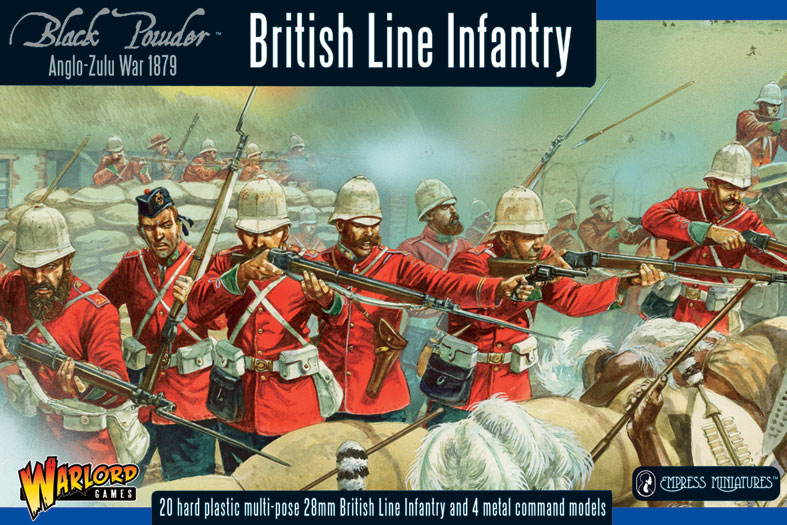
Warlord Anglo Zulu War British Infantry
A casual look at Tommy Atkins of the Victorian period gave little away about his fighting abilities. Standing 5′ 5″ on average, and often shorter, he may or may not be able to read or write. This appearance was deceptive, however. The average British redcoat was the most dangerous animal in Africa, equipped as he was with the Martini-Henry breech-loading rifle which he was capable of firing 15 times a minute out to 1200 yards range in volley fire if needs be. His legendary discipline, his marching ability – enough to traverse all manner of terrain – and his determination to fight his enemies, which were legion, all made the British redcoat an implacable foe. Well led, well-equipped and thoroughly trained in his abilities, he blazed a trail for Empire all over the world. Cheerful and confident the redcoats of the County Regiments served their sovereign well, smashing their enemy with concentrated rifle fire and, if necessary, selling their lives dearly behind the thrust of their wicked long bayonets.Our Redcoats represent any British unit of the Anglo-Zulu War and contains enough Plastic components to make 20 British Infantry with Martini Henry Rifles 4 metal Empress Command Figures - Bugler, Sergeant and two officers302014601£22.50£25.00save 10% -
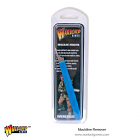
Warlord Games Mouldline Remover
This mould line cleaning tool is an essential addition to the modeller's toolbox. The stainless-steel edge complete with ergonomic handle makes easy work of smoothing away unwanted sprue or mould lines without damaging the model's surface. Excellent for preparing surfaces for undercoating. Can be used on plastic sprue models, photo-etch parts & metal wargaming miniatures. Remove mould lines & shave unwanted sprues Draw the steel edge along the mould line or against the sprue to remove mould lines, leaving a smooth finish Use on plastic model sprues, photo-etch parts or metal wargaming miniatures, preparing surfaces for undercoat painting Ergonomic handle for a comfortable grip and added control
843419907£9.99 -
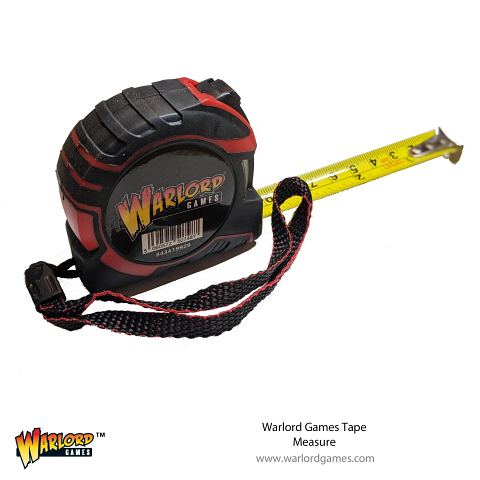
Warlord Games Tape Measure
Measure out your tabletop distances Warlord style with this tape measure emblazoned with the Warlord Games logo. Measures in inches and centimetres, with lock function for greater usability.
843419929£5.00 -
Warlord Napoleonic French Starter Army (Peninsular Campaign)
Contains:96 French Line infantry12 French Chasseurs à Cheval cavalryOfficer on horse6-pdr cannonFull-colour flag sheetsNote: Models supplied unassembled and unpainted309912006£90.90£107.00save 15% -
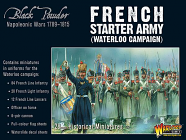
Warlord Napoleonic French Starter Army (Waterloo Campaign)
Contains:84 French Line infantry28 French Light infantry12 French Line LancersOfficer on horse6-pdr cannonFull-color flag sheetsWaterslide decal sheetsNote: Models supplied unassembled and unpainted309912005£90.90£107.00save 15% -
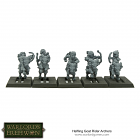
Warlords of Erehwon Halfling Goat Riders with Bows
The Halflings themselves are a lightly armed militia, short on height and equipment but pretty nifty when it comes to shooting, throwing rocks, and sneaking about in the undergrowth. Unfortunately, this lot have their hands full with sword and shield, so have to resort to getting up close and stabbing the knees of larger folk.
TT-HALF07£15.75£17.50save 10% -
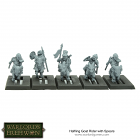
Warlords of Erehwon Halfling Goat Riders with Spears
The availability of mounts suitable for halflings somewhat dictates their method of mounted warfare. Enter the goat; notoriously ill-tempered brutes prepared to bite, kick or peck anyone who comes too close. Although not terribly fast, any unfortunate soul caught in their path is going to feel it! Supplemented of course by a halfling with a long pointy stick.
TT-HALF08£15.75£17.50save 10% -
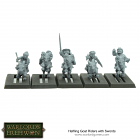
Warlords of Erehwon Halfling Goat Riders with Swords
The availability of mounts suitable for halflings somewhat dictates their method of mounted warfare. Enter the goat; notoriously ill-tempered brutes prepared to bite, kick or peck anyone who comes too close. Although not terribly fast, any unfortunate soul caught in their path is going to feel it! Rile up the goats, and sometimes the halflings simply end up going for a ride.
TT-HALF09£15.75£17.50save 10% -
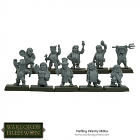
Warlords of Erehwon Halfling Militia
The Halflings are a lightly armed militia, short on height and equipment but pretty nifty when it comes to shooting, throwing rocks, and sneaking about in the undergrowth. The Sheriffs are the best equipped of the bunch, but that is not saying much. Even Halfling urchins, are remarkably adept at chucking rocks and can be armed with slings - catapults most likely - which makes them even more annoying.
TT-HALF03£13.50£15.00save 10% -
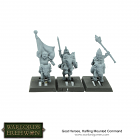
Warlords of Erehwon Halfling Mounted Heroes
A Halfling warband is led by a pillar of Halfling society - the Chief Sheriff or head of what passes for a law-enforcement body amongst Halflings: the Sheriffs. A cynic might say these worthies are more adept at extorting protection money from traders and farmers than they are at dealing with miscreants. None-the-less they are the only representatives of authority that Halflings have, and it can’t be an easy job, can it? Halfling Fortune Tellers may be a deft hand when it comes to manipulating cards and heaven-knows whether they are complete charlatans or genuine workers of magic - it is best not to ask. Some Halfling heroes are so wealthy they even ride into battle mounted, though not all are so well-off that they can afford a donkey! Thus, these heroes ride into battle on the ever gallant goat.
TT-HALF02£13.50£15.00save 10%
Categories
News
WarGameStore Facebook page
12-05-2011 We decided it was easier to use Facebook to post regular updates on what's happening at WarGameStore, so for the latest updates check out this link:
Control Panel
Popular Pages
Help
Contact us
Copyright © 2003-2026 WarGameStore.
- Visa
- MasterCard
- PayPal
- Verified-by-VISA
- Sage