
Cart is Empty
- Home
- Sale
Special offers
Sale
Here are some products that are on sale above and beyond are typical discounts. Some are priced to clear, some items are temporarily on sale.
Products
-

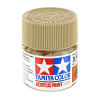
Tamiya 10ml Acrylic Mini XF-78 Wooden Deck Tan
Tamiya 10ml Acrylic Mini XF-78 Wooden Deck Tan
81778£1.50£1.99save 25%
-
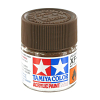
Tamiya 10ml Acrylic Mini XF-79 Lino Deck Brown
Tamiya 10ml Acrylic Mini XF-79 Lino Deck Brown
81779£1.50£1.99save 25% -
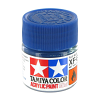
Tamiya 10ml Acrylic Mini XF-8 Flat Blue
Tamiya 10ml Acrylic Mini XF-8 Flat Blue
81708£1.50£1.99save 25% -
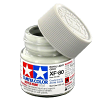
Tamiya 10ml Acrylic Mini XF-80 Naval Sea Grey
Tamiya 10ml Acrylic Mini XF-80 Naval Sea Grey
81780£1.50£1.99save 25% -
Tamiya 10ml XF-83 RAF Medium Sea Grey 2
Tamiya 10ml XF-83 RAF Medium Sea Grey 2
81783£1.50£1.99save 25% -
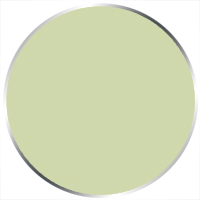
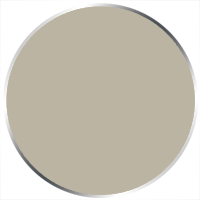
Thrall Flesh
Thrall Flesh - Formulated for the ultimate hobby experience
Developed and used by the leading professionals in the hobby miniatures industry, Formula P3 paints, brushes, and hobby tools bring your miniatures to life.
Privateer Press spent years designing the Formula P3 paint line. Here are a few reasons why it is the best miniature paint on the market.
Great Colors:
The key colors for WARMACHINE and HORDES come in base and highlight shades to make their application intuitive.
Workable Drying Time:
With an extended drying time, you can blend and mix paints without fear of wasting your paint or employing retardants or flow extenders.
Wear Resistant:
The formula dries to a hard and satin finish resistant to chipping. You won't fear handling your finished miniatures.
Liquid Pigment:
Unlike other paints, Formula P3 uses liquid pigments. It never separates when thinned and retains brightness after thinning and drying.
Superior Coverage:
Formula P3 often covers in a single coat - even over a black undercoat.PIP 93071£2.75£3.75save 27% -
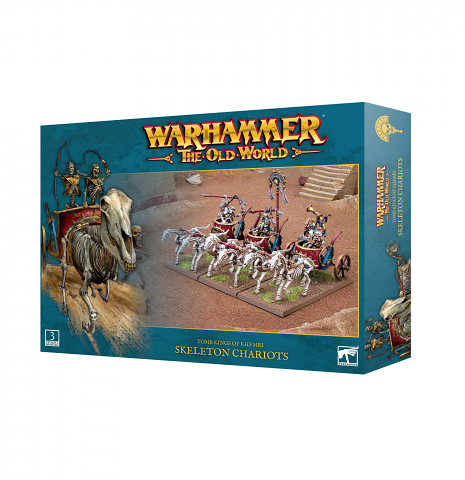
Tomb Kings Of Khemri: Skeleton Chariots
Skeleton Chariots are the pride of the Tomb Kings, gilded and lethal machines crewed even in death by Nehekhara's finest warriors. Often fielded en masse, their rattling advance is heralded by clouds of dust, thrown high into the air as they thunder across the sands. Crashing into the enemy with bone-shattering force, these vehicles crush living bodies beneath their heavy wheels as their undead crew lay about the disorientated foe.This multipart plastic kit builds three Skeleton Chariots, swift linebreakers animated by the Tomb Kings of Khemri. Each of these clattering vehicles is drawn by two undead steeds and crewed by a pair of skeletal warriors, armed with cavalry spears, blades, bows, and whips to smash through ranks of infantry. The kit also provides optional command upgrades, allowing you to build each Skeleton Chariot's crew with a hornblowing musician, a standard bearer with a choice of icon tops, or a Master Charioteer.The kit includes a variety of chariot emblems, weapon designs, skeletal heads, quivers, and arm poses, all of which are interchangeable – meaning you can give your undead legion a varied look, no matter how large it grows.This kit contains 126 plastic components, and 3x Citadel 50x100mm Rectangular Bases. These miniatures are supplied unpainted and require assembly – we recommend using Citadel Plastic Glue and Citadel Colour paints.07-11£35.63£52.50save 32% -
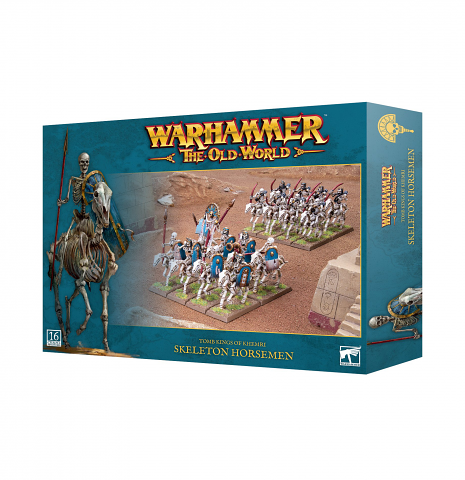
Tomb Kings Of Khemri: Skeleton Horsemen
Skeleton Horsemen and Horse Archers are the tireless, clattering cavalry of Nehekhara's eternal legions, raised in terrifying numbers from the tomb pits of lost ages. Their deathless steeds gallop around the enemy flanks without need for rest, as the skeletal riders lower heavy spears or loose volleys of hissing arrows in perfect unison. It is a brave foe indeed that does not crumble under the advance of these unflinching warriors.This multipart plastic kit builds 16 Skeleton Horsemen, raised to serve the Tomb Kings of Khemri. Each of these undead outriders is mounted atop a skeletal steed, and carries a tall Nehekharan shield alongside a cavalry spear or a one-handed weapon – alternatively, they can be built as Skeleton Horse Archers armed with warbows. The kit provides two command sections, each comprising a musician, a Master of Horse, and a standard bearer with a choice of icon tops, allowing you to field your Skeleton Horsemen or Horse Archers as one large regiment or two smaller units.This kit includes a variety of different weapon and shield designs, skeletal heads, quivers, and arm poses, all of which are interchangeable – so you can ensure your lifeless cavalry still have a lively look to them.This kit contains 160 plastic components, and 16x Citadel 25x50mm Rectangular Bases. These miniatures are supplied unpainted and require assembly – we recommend using Citadel Plastic Glue and Citadel Colour paints.07-10£28.12£40.00save 30% -
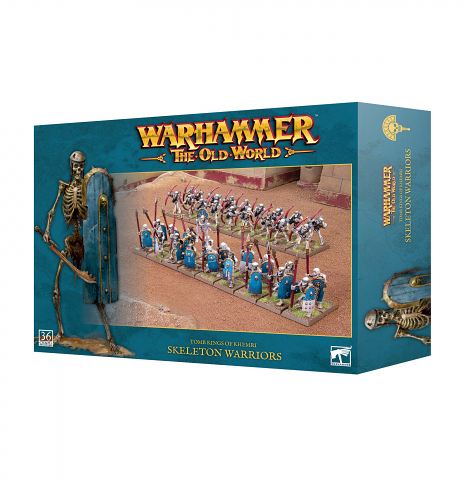
Tomb Kings Of Khemri: Skeleton Warriors
Skeleton Warriors and Archers make up the bulk of the mighty undead armies commanded by the Tomb Kings of Khemri. Rank after rank, regiment after regiment, these unflinching horrors are called forth from sand-swallowed burial sites by the incantations of the Liche Priests. Armed as they were in life, they march forth to fulfil ancient oaths of loyalty and heed the will of their monarch once more.
This multipart plastic kit builds 36 Skeleton Warriors, raised to serve the Tomb Kings of Khemri. Each of these undead footsoldiers carries a tall Nehekharan shield alongside a thrusting spear or a one-handed weapon – alternatively, they can be built as Skeleton Archers armed with warbows and quivers of arrows. This kit also provides all the command upgrades you'll need, whether you choose to field your Skeleton Warriors in small groups or as one great mass – you can build musicians, champions, and standard bearers with a choice of icon tops.The kit includes a variety of different weapon and shield designs, skeletal heads, quivers, and arm poses, all of which are interchangeable – meaning you can give your undead legion a varied look, no matter how large it grows.This kit contains 465 plastic components, and 36x Citadel 25mm Square Bases. These miniatures are supplied unpainted and require assembly – we recommend using Citadel Plastic Glue and Citadel Colour paints.07-09£35.63£52.50save 32% -
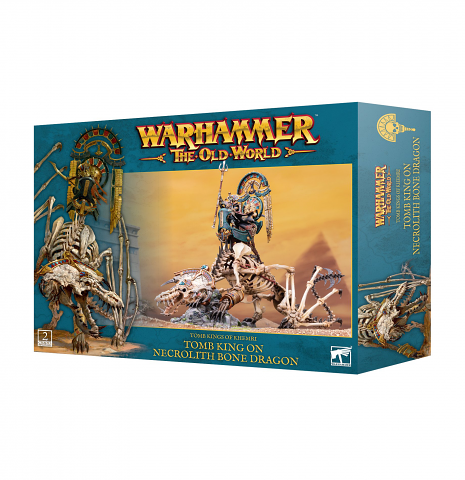
Tomb Kings Of Khemri: Tomb King On Necrolith Bone Dragon
Tomb Kings are the ancient, long-dead rulers of Nehekhara, reborn through the archaic rituals of their Liche Priests. Only the most prestigious rulers can harness the undying will of a fearsome Necrolith Bone Dragon, much less ride such a behemoth into battle. These reanimated wyrms descend upon the living, given unnatural flight by skeletal wings, before lashing out with wicked claws and jagged fangs. Those who survive must contend with clouds of seething dust and desiccating smog, for a dragon's breath is lethal even in death.
This multipart plastic kit builds a Tomb King or Liche Priest mounted on a Necrolith Bone Dragon. This terrifying centrepiece is the jewel of any Tomb Kings of Khemri army, dominating both battlefields and display cabinets. The Tomb King stands atop a grand, chariot-like platform on the Bone Dragon's back, and can be armed with a one-handed khopesh, an imposing great weapon, or a pronged cavalry spear. The Liche Priest instead sits on an ornate throne decorated with Mortuary Cult iconography, brandishing a ritual staff as they conjure a spectral vulture.If this kit is used to build a Liche Priest on Necrolith Bone Dragon, the Tomb King model can instead be assembled separately on foot, armed with a flail and using the additional base provided. The kit includes a shield arm and alternative cloak for building the monarch in this way.This kit contains 96 plastic components, 1x Citadel 100x150mm Rectangular Base, and 1x Citadel 25mm Square Base. This miniature is supplied unpainted and requires assembly – we recommend using Citadel Plastic Glue and Citadel Colour paints.07-08£45.00£63.25save 29% -
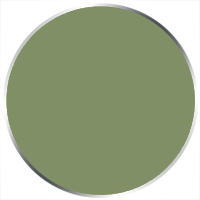
Traitor Green
Traitor Green - Formulated for the ultimate hobby experience
Developed and used by the leading professionals in the hobby miniatures industry, Formula P3 paints, brushes, and hobby tools bring your miniatures to life.
Privateer Press spent years designing the Formula P3 paint line. Here are a few reasons why it is the best miniature paint on the market.
Great Colors:
The key colors for WARMACHINE and HORDES come in base and highlight shades to make their application intuitive.
Workable Drying Time:
With an extended drying time, you can blend and mix paints without fear of wasting your paint or employing retardants or flow extenders.
Wear Resistant:
The formula dries to a hard and satin finish resistant to chipping. You won't fear handling your finished miniatures.
Liquid Pigment:
Unlike other paints, Formula P3 uses liquid pigments. It never separates when thinned and retains brightness after thinning and drying.
Superior Coverage:
Formula P3 often covers in a single coat - even over a black undercoat.PIP 93037£2.75£3.75save 27% -
Trollblood Highlight
Trollblod Highlight - Formulated for the ultimate hobby experience
Developed and used by the leading professionals in the hobby miniatures industry, Formula P3 paints, brushes, and hobby tools bring your miniatures to life.
Privateer Press spent years designing the Formula P3 paint line. Here are a few reasons why it is the best miniature paint on the market.
Great Colors:
The key colors for WARMACHINE and HORDES come in base and highlight shades to make their application intuitive.
Workable Drying Time:
With an extended drying time, you can blend and mix paints without fear of wasting your paint or employing retardants or flow extenders.
Wear Resistant:
The formula dries to a hard and satin finish resistant to chipping. You won't fear handling your finished miniatures.
Liquid Pigment:
Unlike other paints, Formula P3 uses liquid pigments. It never separates when thinned and retains brightness after thinning and drying.
Superior Coverage:
Formula P3 often covers in a single coat - even over a black undercoat.PIP 93070£2.75£3.75save 27% -
Turquoise Ink
Turquoise Ink - Formulated for the ultimate hobby experience Developed and used by the leading professionals in the hobby miniatures industry, Formula P3 paints, brushes, and hobby tools bring your miniatures to life. Privateer Press spent years designing the Formula P3 paint line. Here are a few reasons why it is the best miniature paint on the market. Great Colors: The key colors for WARMACHINE and HORDES come in base and highlight shades to make their application intuitive. Workable Drying Time: With an extended drying time, you can blend and mix paints without fear of wasting your paint or employing retardants or flow extenders. Wear Resistant: The formula dries to a hard and satin finish resistant to chipping. You won't fear handling your finished miniatures. Liquid Pigment: Unlike other paints, Formula P3 uses liquid pigments. It never separates when thinned and retains brightness after thinning and drying. Superior Coverage: Formula P3 often covers in a single coat - even over a black undercoat.
PIP 93018D£2.75£3.75save 27% -
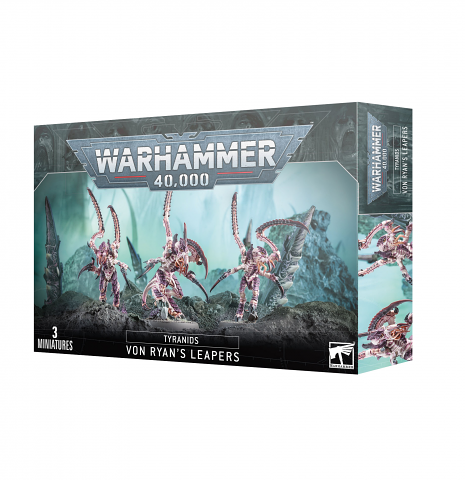
Tyranids: Von Ryan's Leapers
Von Ryan’s Leapers are swift, agile Tyranid bioforms, cunning hunters and stealth ambushers that are especially lethal when fighting in dense terrain. Packs of Leapers lie in wait like living mines, lurking at the optimum locations to cause as much damage as possible. When they sense the perfect time to strike, they burst forth to butcher all around in a murderous frenzy.
This multipart plastic kit builds three Von Ryan’s Leapers, terrifying Tyranid ambush-beasts. These creatures spring from hiding to shred their unsuspecting prey using whip-fast slashes from two pairs of razor-sharp talons – including powerful mantis-like arms resembling the larger Lictor bioform. Then they feast, with a revolting combination of fangs, mandibles, and feeder tendrils.This kit contains 29 plastic components, and comes with 3x Citadel 40mm Round Hex Hole Bases. These push-fit miniatures can be assembled without glue, and are supplied unpainted – we recommend using Citadel Colour paints.51-37£29.25£32.50save 10% -
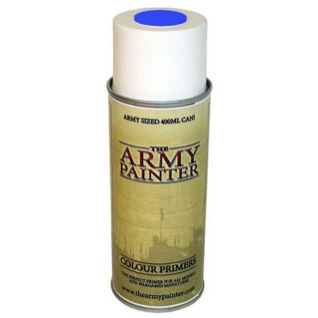
Ultramarine Blue Army Painter Spray
Ultramarine Blue The name says it all... But apart from Space Marines, this is also the perfect colour for Lizardmen, Imp. guard, Cygnar or American Civil War for instance. The Ultramarine Blue colour works well with DARK Tone, shading it to a beautiful finish.AP-CP3022£9.75£13.00save 25% -
Underbelly Blue
Underbelly Blue - Formulated for the ultimate hobby experience
Developed and used by the leading professionals in the hobby miniatures industry, Formula P3 paints, brushes, and hobby tools bring your miniatures to life.
Privateer Press spent years designing the Formula P3 paint line. Here are a few reasons why it is the best miniature paint on the market.
Great Colors:
The key colors for WARMACHINE and HORDES come in base and highlight shades to make their application intuitive.
Workable Drying Time:
With an extended drying time, you can blend and mix paints without fear of wasting your paint or employing retardants or flow extenders.
Wear Resistant:
The formula dries to a hard and satin finish resistant to chipping. You won't fear handling your finished miniatures.
Liquid Pigment:
Unlike other paints, Formula P3 uses liquid pigments. It never separates when thinned and retains brightness after thinning and drying.
Superior Coverage:
Formula P3 often covers in a single coat - even over a black undercoat.PIP 93050D£2.75£3.75save 27% -
US LCM3 Landing Craft
Built by several different manufacturers in different designs the landing craft mechanized (LCM) bore the brunt of transport duties in some of the most famous landings in history.The LCM (3) Higgins is perhaps the most famous, at a length of 50 feet (15 m), it had the capacity to carry one 30-ton tank (e.g. M4 Sherman), 60 troops, or 60,000 lb (27,000 kg) of cargo.Contains:4x metal LCM3 Landing craftShip cardWake marker785011001£11.90£19.50save 39% -
US Navy PT boat flotilla
US Navy PT boat flotilla
On December 7th, 1941, the US Navy could only boast 3 squadrons of motor torpedo boats, or PT boats (patrol torpedo) as they were named. PT squadron 1 was based on Pearl Harbor and the 12 boats opened fire on the incoming Japanese bombers, claiming 2 planes downed for sure and others damaged. Squadron 2 was based in Manila Bay of the Philippines and had a similar introduction to their war, shooting down a few attackers and learning that fast boats were a tricky target for bombers. Squadron 3 was in New York working up and would later see great service in Guadalcanal.The PT boats fought all over the globe, from Pearl Harbor to the Philippines, the Adriatic and Mediterranean and also in the English Channel. They achieved many successes, particularly in the last two years of the Pacific War they accounted for many stalking float planes and many hundreds of barges which were the lifeblood of the overextended Japanese army. This barge hunting was a gruelling business and needed a certain ruthlessness on the behalf of the American crews, Japanese soldiers and sailors being loath to surrender, hence a grizzly end to many a barge crew.Contains: Six PT boats (3x Elco & 3x Higgins)782011002£16.80£21.00save 20% -
Vallejo Game Color Bronze Flesh Tone
A highly pigmented acrylic colour developed for painting fantasy or science fiction miniatures, Vallejo Game Color Bronze Flesh Tone adheres to plastics and metals perfectly, brushing on easily and smoothly and drying to an opaque, matt finish that is waterproof once dry.This paint bottle contains 1x Vallejo Game Color Bronze Flesh Tone 17ml paint bottle
VAL72036D£1.75£2.75save 36% -
Vallejo Game Color Cayman Green
A highly pigmented acrylic colour developed for painting fantasy or science fiction miniatures, Vallejo Game Color Cayman Green adheres to plastics and metals perfectly, brushing on easily and smoothly and drying to an opaque, matt finish that is waterproof once dry.This paint bottle contains 1x Vallejo Game Color Cayman Green 17ml paint bottle
VAL72067D£1.75£2.75save 36% -
Vallejo Game Color Extra Opaque Heavy Ochre
A highly pigmented acrylic colour formulated to provide an especially matt and opaque coating, the Vallejo Game Color Extra Opaque Heavy Ochre covers all primers and base colours with one application.This paint bottle contains 1x Vallejo Game Color Extra Opaque Heavy Ochre 17ml paint bottle
VAL72150D£1.75£2.75save 36% -
Vallejo Game Color Filthy Brown
A highly pigmented acrylic colour developed for painting fantasy or science fiction miniatures, Vallejo Game Color Filthy Brown adheres to plastics and metals perfectly, brushing on easily and smoothly and drying to an opaque, matt finish that is waterproof once dry.This paint bottle contains 1x Vallejo Game Color Filthy Brown 17ml paint bottle
VAL72037D£1.75£2.75save 36% -
Vallejo Game Color Plague Brown
A highly pigmented acrylic colour developed for painting fantasy or science fiction miniatures, Vallejo Game Color Plague Brown adheres to plastics and metals perfectly, brushing on easily and smoothly and drying to an opaque, matt finish that is waterproof once dry.This paint bottle contains 1x Vallejo Game Color Plague Brown 17ml paint bottle
VAL72039D£1.75£2.75save 36% -
Vallejo Game Color Rosy Flesh
A highly pigmented acrylic colour developed for painting fantasy or science fiction miniatures, Vallejo Game Color Rosy Flex adheres to plastics and metals perfectly, brushing on easily and smoothly and drying to an opaque, matt finish that is waterproof once dry.This paint bottle contains 1x Vallejo Game Color Rosy Flex 17ml paint bottle
VAL72100D£1.75£2.75save 36% -
Vallejo Game Color Tan
A highly pigmented acrylic colour developed for painting fantasy or science fiction miniatures, Vallejo Game Color Tan adheres to plastics and metals perfectly, brushing on easily and smoothly and drying to an opaque, matt finish that is waterproof once dry.This paint bottle contains 1x Vallejo Game Color Tan 17ml paint bottle
VAL72066D£1.75£2.75save 36% -
Vallejo Game Ink Skin Wash
An ink developed for shading fantasy or science fiction miniatures, Vallejo Game Ink Skin Wash is ideal for providing shade and darkening models.This paint bottle contains 1x Vallejo Game Ink Skin Wash 17ml paint bottle
VAL72093D£1.75£2.75save 36% -
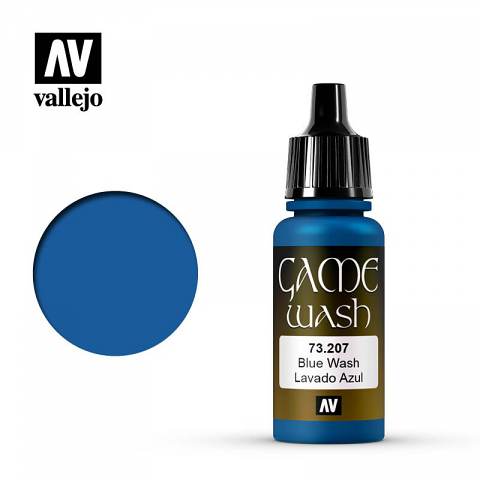
Vallejo Wash - Blue Shade
This wash, made by Vallejo, is designed for painting second world war and similar military paint schemes on miniature wargaming models. This paint bottle is one of the selected colours used by Battlefront Miniatures to make up their Flames Of War paint sets, although it is also ideal for Warhammer and Warhammer 40,000 models, made by Games Workshop. Vallejo is a specialist acrylic paint company based in Spain who have been manufacturing paint for the hobby and wargaming markets since 1965.The colors are supplied in 17ml plastic bottles with eyedropper.
VAL73207D£1.75£2.75save 36% -
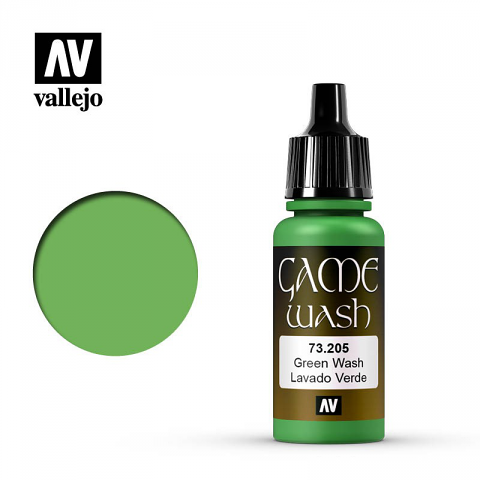
Vallejo Wash - Green Shade
This wash, made by Vallejo, is designed for painting second world war and similar military paint schemes on miniature wargaming models. This paint bottle is one of the selected colours used by Battlefront Miniatures to make up their Flames Of War paint sets, although it is also ideal for Warhammer and Warhammer 40,000 models, made by Games Workshop. Vallejo is a specialist acrylic paint company based in Spain who have been manufacturing paint for the hobby and wargaming markets since 1965.The colors are supplied in 17ml plastic bottles with eyedropper.
VAL73205D£1.75£2.75save 36% -
Victory at Sea Admiral Graf Spee & Admiral Scheer
The Deutschland-class of warships were relatively small, by battleship standards, but were well armoured and carried the type of armament traditionally seen only on battleships. This led to them being nicknamed ‘pocket battleships’. Superb commerce raiders, the Admiral Scheer successfully plied the Atlantic and Indian Oceans, disrupting merchant shipping wherever it went, whilst the Admiral Graf Spee was famously cornered during the Battle of the River Plate and scuttled herself soon after.
742411012£22.00£27.50save 20% -
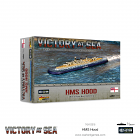
Victory at Sea HMS Hood
At one time, the HMS Hood was the largest and possibly most famous ship in the world, representing the supremacy of British sea power. Though attached to Home Fleet, the Hood took part in the sinking of the French fleet at Oran. She was sunk by the Bismarck in 1941 after accurate shelling from the German ship caused a massive explosion on the Hood which sank within minutes, leaving only three survivors – certainly one of the more spectacular deaths of any capital ship.
742412018£16.40£20.50save 20% -
Victory at Sea IJN fleet box
For centuries, Japan's policy of seclusion (sakoku) saw it concentrate on coastal defences in order to repel foreign vessels. However, with the advances other maritime nations were making, it eventually became obvious that no longer would Japan be able to ignore the rest of the world. As an island power, it needed a modern navy. Turning to Britain for assistance, Japan quickly created a powerful modern fleet. It was this capable and confident navy that came out to fight the American Pacific Fleet.The Japanese understood the potential of air power early and created an effective carrier arm. In addition to the carriers, the Imperial Japanese Navy possessed a powerful battleship force, which included the largest and most powerful battleships in the world, the Yamato and the Musashi. The Imperial Japanese Navy's potential was demonstrated in the attack on Pearl Harbor in 1941. Using armour-piercing bombs and torpedoes, Japanese aircraft inflicted tremendous damage on the American Pacific fleet as it lay at anchor.Midway was the turning point of naval war in the Pacific and, from then on, the Imperial Japanese Navy was unable to make any headway against the increasing carrier strength of the US Navy. With the victorious Allies pushing towards the Japanese islands, the Imperial Japanese Navy fought desperately to keep them at bay. Kamikaze aircraft and other suicide weapons were deployed, and eventually warships of the Imperial Japanese Navy made death-rides against US forces.Contents:Kongō -class Battleship Kongō 1941Shōkaku-class Carrier - ZuikakuMogami-class Cruiser - Suzuya 1944Mogami-class Cruiser - Mikuma 1942Agano-class Cruiser - Yahagi 1943Kagero-class Destroyer 1941 x3Fighter Aircraft - Mitsubishi A6M2 Zero x 4 flightsShip Cards and Damage SlidersAssembly InstructionsShips are in Resin and Warlord Resin742411002£88.00£110.00save 20% -
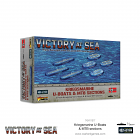
Victory at Sea IJN Submarines & MTB sections
Submarines: The Kaidai-7-class, or KD-7, was developed in the late 1930s, following on from the preceding KD-6 class. With a surface range of 8,000nm at 16kts, and a submerged endurance of 50nm at 5kts, they possessed a slightly better underwater performance to the late-model KD-6s and better surface speed (though not range) than the earlier members of that class. All members of the class were lost by mid-1944. Another ocean-going submersible using 533mm forward and aft torpedo tubes, it served in the South Pacific as well as the waters off Australia. I-177 sunk the hospital ship AHS Centaur off Stradbroke Island. It was presumed lost with all hands on 18 November 1944, while the I-176 was lost six months earlier off of the Solomon’s. There were 10 KD-7 submarines built overall.MTBs: Designed as a suicide craft, the Shin’yō either carried a powerful explosive or two depth charges. The depth charges were intended to be planted by the pilot of the boat, after which he would then make his escape. Although nearly 10,000 were built, they accounted for the sinking of only 5 ships, mainly landing craft.The Imperial Japanese Navy fielded a number of variants on a standard torpedo boat design, differing mainly in machinery fit which affected displacement, giving the illusion of more variety than existed in practice. 238 boats were built within these designations, all armed with two 18-inch torpedoes and 25mm or 13.2mm guns.Box contains:Kaidai-7-class Submarines x 3Shin’yo Kamikaze boat sections x 2T-14 MTB sections x2Ship Cards743211008£27.60£34.50save 20% -
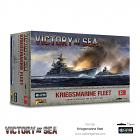
Victory at Sea Kriegsmarine fleet box
The Kriegsmarine had to be virtually rebuilt after the First World War. Forbidden to own capital ships and submarines, Germany nibbled away at first one clause of the Treaty of Versailles, then another, until a powerful navy force existed.At the outbreak of World War Two, relatively few capital ships were in commission, and no aircraft carriers. There was never any prospect of matching Britain in terms of capital ship numbers, but the qualitative advantage of the proposed super-battleships might have made a considerable difference. In any case, the Kriegsmarine was not a navy designed to tackle a major fleet head-on in fleet engagements. Instead, it was a commerce raiding force.German capital ships were built according to principles tried out in World War One; internal compartmentalisation and damage control measures made them very difficult to sink, while their efficient power plants ensured a good top speed, essential in a raider. Coupled with excellent fire control – using radar and other means – and big guns to make use of it, these vessels were extremely potent weapons.It has been said that Hitler never really understood naval warfare; be that as it may, the Kriegsmarine suffered from a lack of funding and materials, and from the internal politics of the Nazi leadership. Among its greatest detractors was Herman Goering, who connived constantly to ensure resources flowed into his Luftwaffe to the detriment of the navy. Major warship projects suffered from constant stops and starts as resources were allocated, then redistributed to other projects.Eventually, as the tide of war turned against Germany, Hitler gave up on his navy and transferred guns originally intended for ships to the coastal fortifications of the Atlantic Wall. The Kriegsmarine continued to fight on with dwindling resources. U-boats and destroyers remained a menace to allied shipping to the very end of the war.Contents:Scharnhorst-class Battleship - Scharnhorst 1939Admiral Hipper -class cruiser - Blücher 1940Admiral Hipper -class cruiser - Prinz Eugen 1940Admiral Hipper-class cruiser - Admiral Hipper 1939Königsberg -class cruiser - Köln 1941Königsberg -class cruiser - Königsberg 1940Type 1936A-class Destroyer x3Dive Bomber Aircraft - Junker Ju-87 Stuka flight x4 flightsShip Cards and Damage SlidersAssembly InstructionsShips are in Resin and Warlord Resin742411001£88.00£110.00save 20% -
Victory at Sea Kriegsmarine U-Boats & MTB sections
Submarines: A long-ranged submersible, the Type IX was the most successful U-boat of the war, with each vessel averaging over 100,000 tons of shipping sunk. One Type IX, U-107, made the most successful convoy mission of the war, with nearly 100,000 tons of shipping sunk out of Freetown in Africa. The latest variants of this design were capable of ranges of more than 23,000 miles, allowing them to rove far in search of convoys, while their heavy load of torpedoes allowed them to keep pace with a convoy, attacking night after night.MTBs: The R1-class of R-Boat (from the German Räumboot, meaning minesweeper) was intended to be used as a shallow water minesweeper but, as the war went on, it became a multi-role craft. Its duties expanded to include patrol, antisubmarine, convoy escort, minelaying, and rescue operations. Some classes of R-Boat, such as the R310, were fitted with torpedo tubes, though performance was very modest compared to craft specifically designed for the role.The ultimate S-Boat to be operational in significant numbers was the S-100-class, which was produced from 1943 and was said to be the best fast patrol boat of its time. The S-100-class was nicknamed the Calotte, as it featured a rounded armoured bridge. It was powered by three Daimler-Benz engines giving it an overall capacity of around 7,500 hp and developing an outstanding top speed of 48 knots.Box contains:Type IX U-Boats x 3S-100 S-Boat sections x2R-Boat sections x2Ship Cards742411017£27.60£34.50save 20% -
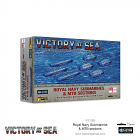
Victory at Sea Royal Navy Submarines & MTB sections
Submarines: Designed for use in North European and Mediterranean waters, the S-class was manoeuvrable with a noted ability to crash dive extremely quickly. Combined with a large salvo of torpedoes, this was a successful design of pre-war years that was soon updated and put back into production.MTBs: The Fairmile A was designed from the outset to use prefabricated components that could be produced by small businesses such as furniture manufacturers, which would then be assembled at shipyards. Capable of 25 knots, it mounted a 3-pounder gun and a pair of .303 machine guns, as well as Depth Charge.Designed with the form of a destroyer’s hull, the Fairmile B (like its predecessor, the Fairmile A) was intended primarily as a submarine-chaser, and so was fitted with Depth Charge. Manufactured in large numbers, the Fairmile B was also famously used on the raid on St. Nazaire.Capable of 26 knots, the Fairmile C was a motor gun boat, mounting two 2-pounders and eight machine guns of various calibres. It was mainly used for close escort duties and some clandestine missions.Nicknamed ‘Dog Boat,’ the Fairmile D was highly adaptable and could be fitted with a range of armament that meant it could act as both motor gun and torpedo boat. Some were used by the Royal Air Force for long range rescue of downed airmen.Box contains:S-Class Submarines x 3Fairmile MTB sections (A,B,C & D) x 4Ship Cards743212006£27.60£34.50save 20% -
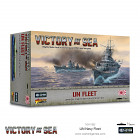
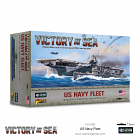
Victory at Sea US Navy fleet box
Although the United States of America contains a vast area of land, almost all of its allies and trading partners are overseas, and those interests require a powerful navy to support them.The US Navy possessed some of the largest and most modern battleships in the world at the outbreak of World War Two, and despite losses during the Japanese attack on Pearl Harbor, was able to maintain a powerful presence in the Pacific. However, in the vast reaches of that ocean the battleship was no longer the king of battle. It was fortunate for the Americans that the handful of aircraft carriers then in service with the US Navy escaped destruction; given later events it is doubtful that a pure battleship force could have defeated the Imperial Japanese Navy.The aircraft carrier became the main US naval asset during the war in the Pacific, which was very much a conflict between the air assets of opposing fleets. US carrier forces were hard-pressed early on but as the industrial might of the US was brought to bear, new carriers and air groups for them were deployed in such numbers that the enemy simply could not match their strength.US naval forces were primarily engaged in the Pacific, but some capital ships and larger numbers of destroyers were deployed to the Atlantic theatre where their primary opponents were German U-boats.Contents:New Mexico-class Battleship - USS New Mexico 1941-42Essex class Carrier - USS Essex 1944Northampton-class Cruiser - USS Houston 1940Northampton -class Cruiser - USS Chester 1941Portland-class Cruiser - USS Portland 1942Clemson-class Destroyer x3Fighter Bomber Aircraft - F4-U Corsair x4 flightsShip Cards and Damage SlidersAssembly InstructionsShips are in Resin and Warlord Resin742412002£88.00£110.00save 20% -
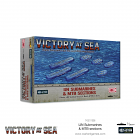
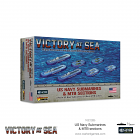
Victory at Sea US Navy Submarines & MTB sections
Submarines: The Gato-class of submarine was the first mass production US submarine class of the Second World War, forming the majority of the United States Navy’s submarine fleet of the war. It was the Gato-class, and the successors of her design that were largely responsible for the disruption of the Japanese merchant fleet. Individual Gato-class vessels were given names of marine creatures, with the lead of her class named for a type of small catshark.MTBs: The Elco mounted four torpedo tubes which, combined with its speed, made it a serious threat to larger ships. The largest PT boat used by the US Navy, the Elco is also notable for future President Kennedy commanding one. Crews of these boats relied on their smaller size, speed and manoeuvrability – and darkness – to survive.Box contains:Gato-Class Submarines x 3Elco ‘77 PT Boat sections x 2Elco ‘80 PT Boat Sections x 2Ship Cards743212005£27.60£34.50save 20% -
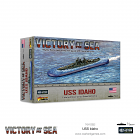
Victory at Sea USS Idaho
USS Idaho, the third of three ships of the New Mexico-class of Battleship, was the fourth vessel to bear the name. She was launched in June 1917 and commissioned in March 1919. She was armed with a battery of twelve 14” guns in four turrets and was protected with heavy armour plate (13.5” thick in the main belt).During the 20s and 30s, Idaho spent the majority of her time as part of the Pacific Fleet, conducting routine training exercises. She was modernised in the early 30s. During World War II, but before the United States’ entry into hostilities, she was assigned to join the Neutrality Patrols that protected American shipping during the Battle of the Pacific. Following the attack on Pearl Harbour, she was redeployed to the Pacific Theatre, along with her sister ships.For the remainder of the war she supported amphibious operations in the Pacific, shelling Japanese forces during the Gilbert and Marshall Islands and Philippines campaigns. She also supported the invasions of Peleliu, Iwo Jima and Okinawa. Idaho was present in Tokyo Bay when Japan formally surrendered on 2 September 1945. Idaho was decommissioned the next year and dismantled in 1947.Contains one ship in Resin and Warlord Resin742412052£16.40£20.50save 20% -
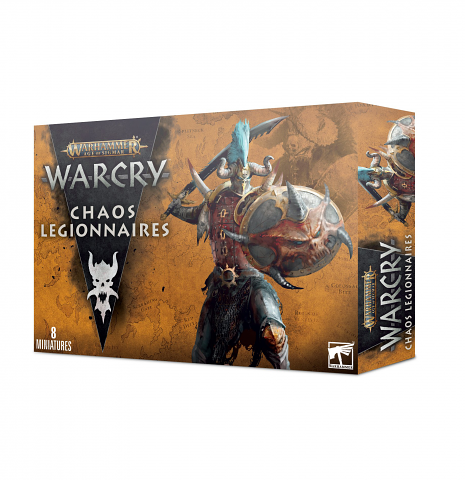
Warcry: Chaos Legionaires
Chaos Legionnaires are elite, well-armed, and highly disciplined – yet though they march alongside the armies of the Dark Gods, these warbands have a shadowy agenda of their own. Sworn to the First Prince, the Legionnaires uphold a secret religion known as the Dark Creed, and strive with each victory to sow confusion, reap dissent, and bring their Dark Master closer to his insidious ascension.Smash the enemies of Be'lakor with the cruel martial discipline of the Chaos Legionnaires. This warband set allows you to bring these armoured elites to battle, containing:- Eight multipart plastic Chaos Legionnaires – 1x Decuriarch, 1x Mutandor with Beast Spear, 3x Hornhelms (each with a choice of Darkiron Mace or Steelbite Axe), and 3x Hornshields (each with a choice of Axe, Mace, or Sword), as well as cosmetic options like alternate heads and dagger accessories for each model- A Chaos Legionnaires abilities card, allowing you to unleash the distinctive and deadly battle tactics of this warband in your games of Warcry (in English, French, Italian, German, Spanish, Chinese, Japanese, and Russian)- Seven fighter cards for keeping track of your rules at a glance, plus two wound divider cardsThis warband can also be used as a complete unit in Slaves to Darkness armies for Warhammer Age of Sigmar. Rules for using this unit in your games of Warhammer Age of Sigmar are available to download for free from the Warhammer Community website.This set comprises 116 plastic components, and is supplied with 5x Citadel 32mm Round Bases and 5x Citadel 28.5mm Round Bases. These miniatures are supplied unpainted and require assembly – we recommend using Citadel Plastic Glue and Citadel paints.111-87£32.00£40.00save 20% -
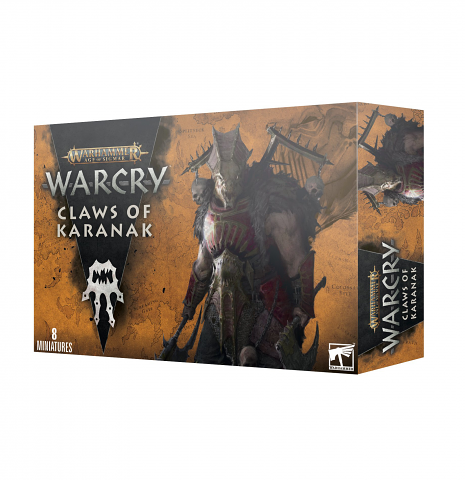
Warcry: Claws Of Karanak
The Claws of Karanak venerate the Flesh Hounds of Khorne, becoming bloodthirsty hunters who pursue craven prey in the Blood God's name. These predator-cults fight like packs of wild animals, taking on the aspect of daemonic beasts as they hack foes to shreds in horrific displays of brutality.This multipart plastic kit builds a full warband of the Claws of Karanak, for use in games of Warcry. Ruled by a savage Packlord, these crazed cultists are draped in furs and chains, wearing snarling masks or going bare-headed to battle. They use an array of barbed blades, spears, and flails to shed blood in their patron’s name, aspiring to become one of the mighty half-daemon Hounds of Wrath.These models can also be used as part of a Blades of Khorne army in games of Warhammer Age of Sigmar.This set contains eight plastic miniatures:- 1x Packlord- 1x Hound of Wrath- 2x Brutalisers, which can each be armed with paired shredder blades or a shredder blade and meat hook- 4x Blood Whelps, which can each be armed with a barb-spear or claw-flailThis set also includes:- A Claws of Karanak abilities card, to help unleash this warband’s hellish hunting tactics in your games of Warcry (in English, French, Italian, German, Spanish, Chinese, and Japanese)- 6x Claws of Karanak fighter cards, for referencing your rules and stats at a glance- 2x wound divider cards, for tracking your fighters in battleThis kit comprises 62 plastic components, and comes with 1x Citadel 60x35mm Oval Base, 1x Citadel 40mm Round Base, 2x Citadel 32mm Round Bases, and 4x Citadel 28mm Round Bases. These miniatures are supplied unpainted and require assembly – we recommend using Citadel Plastic Glue and Citadel Colour paints.112-03£32.00£40.00save 20% -
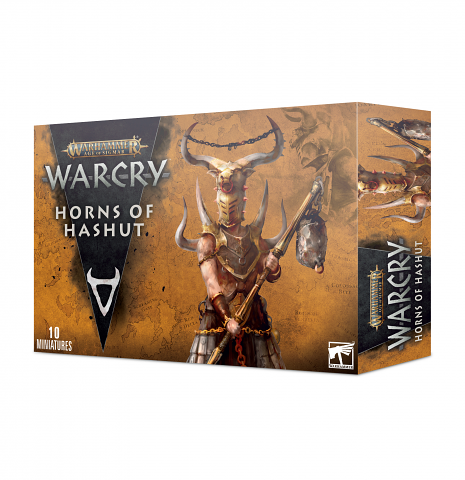
Warcry: Horns Of Hashut
The Horns of Hashut are heralds of ruin and desolation, relentless destroyers sent forth by the Father of Darkness. Each region they conquer is pulverised, stripped, and rendered barren for the industrial tyranny of their daemonic god. The Horns of Hashut wage war like a raging taurus, stampeding over their foe to crush them entirely, swinging heavy weapons while unleashing cruel devices of duardin design – choking ash bombs and infernal flamehurlers.This multipart plastic kit builds a full warband of the Horns of Hashut, for use in games of Warcry. Led by Ruinator war-leaders, these zealous slavers don work-leathers, chains, and scaled armour for battle. While the elites wear brazen war-masks and wield a variety of flails, horned bidents, ash bombs, and flame-hurling devices, the warband's lesser Shatterers are armed with tools of labour such as hammers and mattocks. These models can also be used as part of a Slaves to Darkness army in games of Warhammer Age of Sigmar.This set contains 10 plastic miniatures:- 1x Ruinator Alpha (with a War Bident or Heavy Flail)- 1x Ruinator- 3x Demolishers with Crushing Weapons- 1x Demolisher with Crushing Weapon and Shield- 1x Demolisher with Flamehurler- 3x ShatterersThis set also includes:- A Horns of Hashut abilities card, to help unleash this warband’s merciless tactics in your games of Warcry (in English, French, Italian, German, Spanish, Chinese, Japanese, and Russian)- 7x Horns of Hashut fighter cards, for viewing your rules at a glance- 2x wound divider cards for tracking your fighters in battleThis kit comprises 90 plastic components, and is supplied with 3x Citadel 32mm Round Bases, 4x Citadel 28.5mm Round Bases, and 3x Citadel 25mm Round Bases. These miniatures are supplied unpainted and require assembly – we recommend using Citadel Plastic Glue and Citadel Colour paints.111-92D£32.00£40.00save 20% -
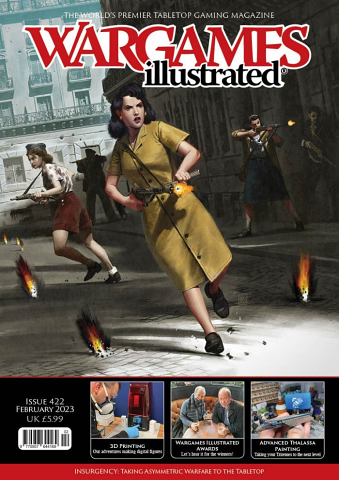
Wargames Illustrated Magazine Issue 422 February 2023
Wargames Illustrated Magazine Issue 422 February 2023
WI Issue 422£4.19£5.99save 30% -
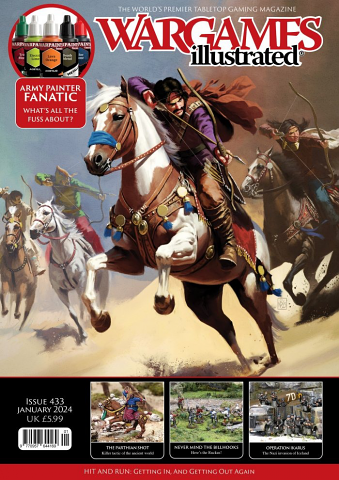
Wargames Illustrated Magazine Issue 433 January 2024
OBSERVATION POSTThis month’s reviews encompass minis for a trio of wars - Cold, inter, and WWII - as well as a sizable selection of new plastics for Feudal Japan.RELEASE RADARDom Sore finds an eclectic selection of new hobby kit to start 2024 in the right way.QUICK FIREFind out what your fellow hobbyists have been up to in our monthly reader-submitted section.theme: The Parthian ShotJames examines how the skilled Parthian riders used Hit and Run tactics to defeat the might of Rome at the Battle of Carrhae.theme: Sortie!Its Medieval mayhem, with Hit and Run rules for making a sortie out of strongholds in Never Mind the Billhooks.THE BATTLE OF GALLABAT - PART ONEKarim van Overmeire played a World War Two mini-campaign based on the Italian defence of Gallabat. In this first part, he details the history of the battle, outlines the terrain, and presents some gaming options.theme: AN OUTRAGE WHICH COULD NOT BE COUNTENANCEDJim Graham examines the misnomer of No Man’s Land as the British launch a Hit and Run attack during WWI.THE AEOLIAN RAIDERSRicard Fortun brings pirate fleets to his Ancient naval game Thalassa.theme: THE SWAMP FOXJames discusses Hit and Run attacks in South Carolina’s swamplands during the American War of Independence.OPERATION IKARUS - PART ONELisa Smedman presents a World War Two ‘what if?’ with Britain and Germany clashing in Bolt Action battles over neutral Iceland.PETER CUSHING’S WARGAMING EPHEMERAFamous actor Peter Cushing was a keen wargamer and avid terrain maker. The fascinating notes he made about his hobby are now owned by Alan Perry and we take a look here.THE BATTLE OF ORAVAISJan Karrman recreated a battle from the Finnish War for Salute 2023, with a little help fromhis friends.THE ARMY PAINTER WARPAINTS FANATIC RANGEJames, the office’s resident speed painter, tests out The Army Painter’s new Fanatic range.DESIGNER’S NOTES: NEVER MIND THE BILLHOOKS - HERE’S THE RUCKUSMike Peters shares details of his Billhooks-inspired medieval small skirmish game, where each player controls a Captain and their compact company of warriors.WI Issue 433£4.19£5.99save 30% -
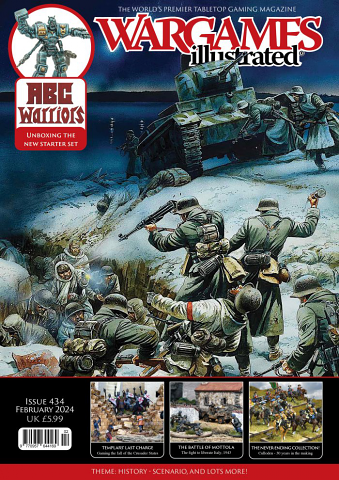
Wargames Illustrated Magazine Issue 434 February 2024
OBSERVATION POSTWe review new basing materials, fantasy elves, an ECW painting guide, and rules for gaming the late Sengoku period in Japan.RELEASE RADARDom Sore’s monthly column shines a light on new and upcoming wargaming kit from an assortment of manufacturers.QUICK FIREWhat have your fellow hobbyists been up to? Find out in Quick Fire, our regular, reader submitted section.theme: HISTORY, SCENARIO, STATS. DONE.Pete Brown introduces this month’s theme with an article examining how best to explore History - Scenario gaming.theme: THE TEMPLARS’ LAST CHARGESteve Tibble casts his expert gaze over the last moments of the Templars at war, during the Siege of Acre.The Never-Ending CollectioNPete Brown again, this time reporting on the Culloden game he ran at the Warlord Games Open Day.Adriatic AdventuresDave Watson outlines Russian activities in the Adriatic in 1806, and offers a Napoleonic tabletop scenario with a difference.ABC Warriors The Miniatures GameJames guides us through Warlord Games’ new 2000 AD related ABC Warriors starter set.theme: A freezing fighting retreatDom Sore follows up on last issue’s Hit and Run theme with an article that examines the Italians’ fighting retreat from Russia in World War Two.THE ATTACK ON FORT GALLABATLast issue, Karim van Overmeire outlined the background and gaming basics for this WWII action in the African Campaign. This time he shows how to translate the gaming into a one-day campaign.theme: The Battle of MottolaA Liberation of Italy skirmish encounter for Bolt Action by Colin Ball.Wargaming ManzikertSimon MacDowall provides a detailed account of a clash in the East, between the Byzantines of Romanus IV and a Seljik army led by Alp Arslan.Operation Ikarus part twoLisa Smedman returns to Iceland in the second part of her WWII ‘what if?’ Bolt Action campaign.Ruckus in the Wi Gaming RoomIn this article, James presents highlights from some of the dramatic Ruckus tabletop clashes that have been played in Wi’s gaming room.AN ACW SIGNAL TOWER: MAKING AND GAMINGMatt Parkes makes a tabletop vantage point for his Union Signal Party, and gaming guru Rick Priestley provides ideas for using it in his Black Powder rules.WI Issue 434£4.19£5.99save 30% -
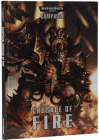
Warhammer 40,000 Crusade of Fire Campaign Book
Crusade of Fire is a campaign system for Warhammer 40,000 that enables you to join the campaign to control the Corvus Sub-sector either by joining Crusade of Fire, the foul Servants of Ruin or the bloodthirsty Prophets of War, it's your call.
As well as the campaign system itself, this 96 page full colour book contains rules for any Warhammer 40,000 game, from massive multi-player scenarios fought in low-gravity environments or in bunkers deep below the ground, to expanded rules for Flyers. It also features rules for playing games in the gladiatorial arenas of Commorragh as well as for fighting battles on the surface of a Daemon World.
You can also read the stories of nine hobbyists as they play through the campaign, including detailed battle reports, fantastic army showcases and turn-by-turn accounts of their conquest.40-16-13£12.50£25.00save 50% -
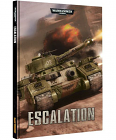
Warhammer 40,000: Escalation Sourcebook
Warhammer 40,000: Escalation contains full rules for adding super-heavy vehicles and gargantuan creatures to every Warhammer 40,000 army. This means you can now use these massive models in games of Warhammer 40,000 as well as games of Apocalypse.
This 96-page, full colour, hardback supplement contains:
· A background section introducing Lords of War units and their terrifying impact on the battlefield.
· All the rules needed to play with super-heavy vehicles (including Flyers and Walkers) and Gargantuan Creatures, as well as rules for their potent wargear.
· An amended force organization chart that allows players to choose Lords of War units as part of their standard Warhammer 40,000 armies.
· Datasheets for every plastic super-heavy Citadel miniature, plus a selection of super-heavy vehicles and gargantuan creatures from Forge World.
· A showcase of expertly painted Lords of War Citadel miniatures.
· New Altar of War and Gauntlet Challenge missions that can be played instead of the Eternal War missions in the Warhammer 40,000 rulebook.
You will need a copy of the Warhammer 40,000 rulebook and relevant codexes in order to use the contents of this book.40-13-60£15.00£30.00save 50% -
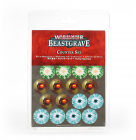
Warhammer Underworlds: Beastgrave Tokens
Need to keep track of something? Chances are, there’s a counter in this set for you. Inside, you’ll find two double-sided sheets of card counters, allowing you to keep an eye on anything from dark rituals to uncontrollable Waaagh! Energy.This set contains:- 6 Feast counters- 1 Horn counter- 6 Madness counters- 6 Potency counters- 6 Ritual counters- 5 Sacrifice counters- 15 Waaagh! counters- 1 Wildform: +1 Move counter- 1 Wildform: +1 Wounds counter- 1 Wildform: +1 Defence counterThese tokens are made of card, and feature art on the reverse.110-78D£6.00£12.00save 50% -
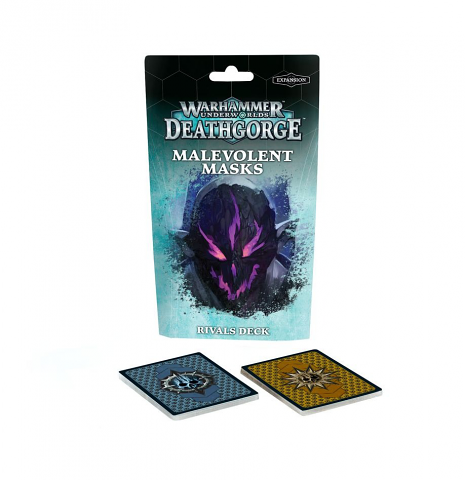
Warhammer Underworlds: Malevolent Masks Rivals Deck
The ice-coated tunnels of the Deathgorge contain untold treasures frozen within their walls. Those brave enough to traverse the freezing continent of Bjarl and weather the Everwinter's curse must still battle rival warbands to have any hope of claiming these riches. The Malevolent Masks lay long-forgotten in the depths of Bjarl. Lost for centuries, they have now been discovered in the glacial chasms of the Deathgorge. Donning them grants the bearer power, but often at a cost, as few truly realise the consequences of wearing such an item.Get stuck into Warhammer Underworlds or mix up your game with the complete Malevolent Masks Rivals deck, usable by any warband – including those from past seasons. These cards can be used as a standalone deck in Rivals games, mixed with a warband's unique cards for Nemesis games, or used to build a deck from the ground up in Relic games. This deck doesn’t include any spells, so warbands from any season can put it to good use. Each card is brand new to the game, and the deck is focused on empowering fighters, allowing them to score Objectives more easily when equipped with a haunted Mask.This deck contains a 32-card universal Rivals deck consisting of:– 12x objective cards– 10x gambit cards– 10x upgrade cards– 1x background card that includes a deck list of the Malevolent Masks cardsThese cards can be used by any warband as a complete Rivals deck, or as part of a custom-built deck. You’ll need a Warhammer Underworlds core set to use this expansion.The Rivals format is designed to be the most accessible way to play Warhammer Underworlds, as players face off using pre-made decks in a test of skill. Rules for all formats can be found on the Warhammer Community website.109-31£14.40£18.00save 20% -
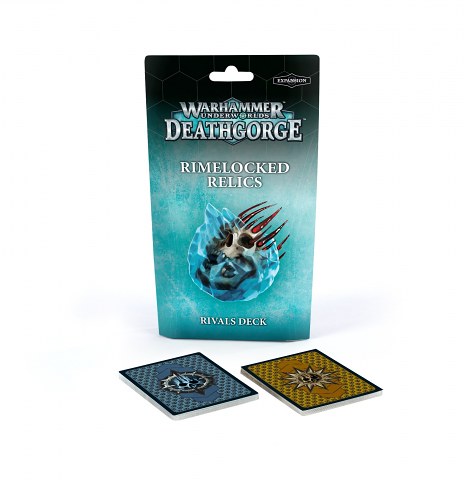
Warhammer Underworlds: Rimelocked Relics
In the Deathgorge’s depths lie blood-magic artefacts encased within ancient ice. These Rimelocked Relics are the treasures of lost civilisations – weapons and artefacts held fast in the Everwinter’s arctic clutches. Only a burning desire can thaw the magical hoarfrost to free them, though many warriors attempt more exotic and dangerous methods to unleash their terrible power.
Get stuck into Warhammer Underworlds or mix up your game with the complete Rimelocked Relics Rivals deck, usable by any warband – including those from past seasons. These cards can be used as a standalone deck in Rivals games, mixed with a warband's unique cards for Nemesis games, or used to build a deck from the ground up in Relic games. This deck doesn’t include any spells, so warbands from any season can put it to good use. Each card is brand new to the game, focused on acquiring extremely powerful upgrades – but you'll have to thaw them out before they can be used...This deck contains a 32-card universal Rivals deck consisting of:– 12x objective cards– 10x gambit cards– 10x upgrade cards– 1 plot card– 1x background card that includes a deck list of the Rimelocked Relics cardsThese cards can be used by any warband as a complete Rivals deck, or as part of a custom-built deck. You'll need a Warhammer Underworlds warband, including their fighter cards, to use the contents of this deck.The Rivals format is designed to be the most accessible way to play Warhammer Underworlds, as players face off using pre-made decks in a test of skill. Rules for all formats can be found on the Warhammer Community website.109-32£14.40£18.00save 20%










Categories
News
WarGameStore Facebook page
12-05-2011 We decided it was easier to use Facebook to post regular updates on what's happening at WarGameStore, so for the latest updates check out this link:
Control Panel
Popular Pages
Help
Contact us
Copyright © 2003-2026 WarGameStore.
- Visa
- MasterCard
- PayPal
- Verified-by-VISA
- Sage